AI becomes useful when it is connected to the systems where work happens. This guide explains practical patterns for integrating AI into CRMs, helpdesks, and internal tools safely.
Category: Writing
My writing

AI education • workflow clarity • practical guidance
My writing
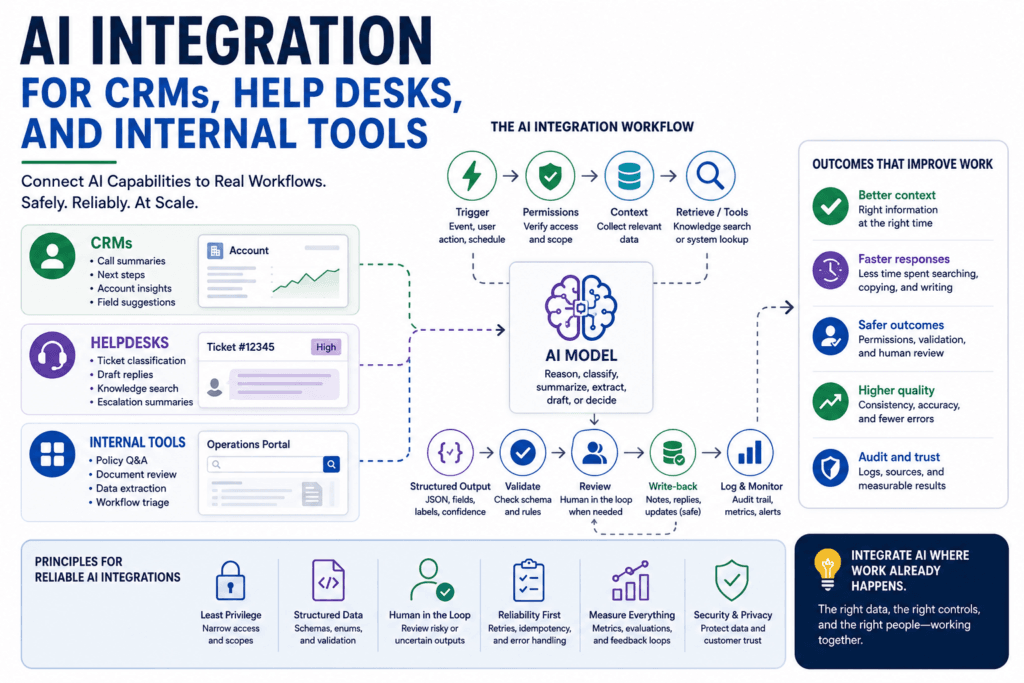
AI becomes useful when it is connected to the systems where work happens. This guide explains practical patterns for integrating AI into CRMs, helpdesks, and internal tools safely.
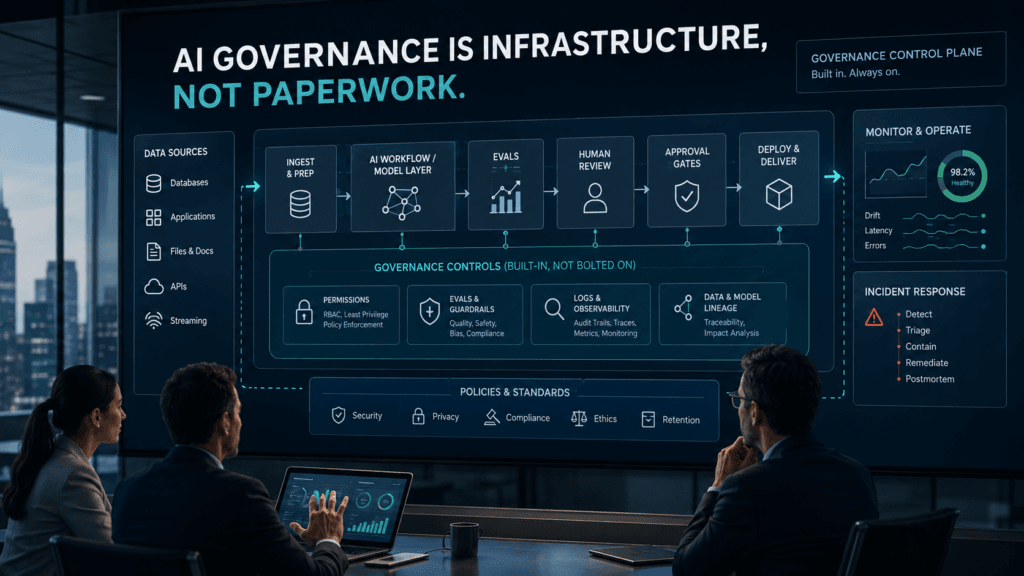
A company can have an AI policy and still have weak AI governance. The real test is whether governance changes how AI systems access data, use tools, route decisions, log behavior, involve humans, and recover from failure. As AI moves into production workflows, governance has to become part of the operating infrastructure.
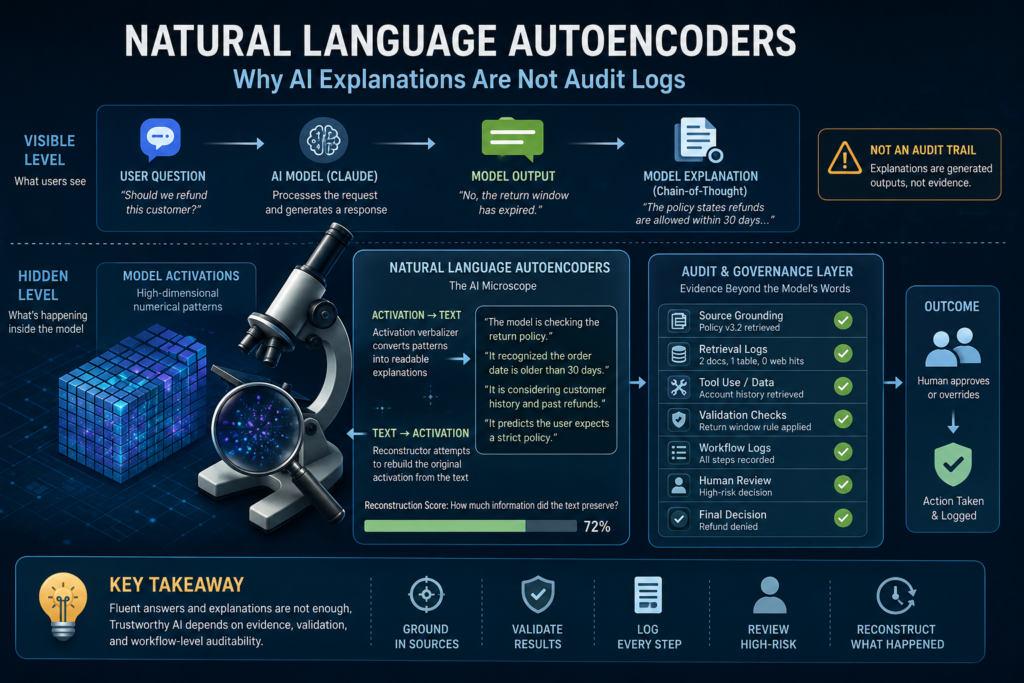
Natural language autoencoders are being described as an AI microscope, but the business lesson is not that Claude thinks like a person. The real lesson is harder: fluent answers, polished explanations, and strong benchmarks are not enough evidence of reliable AI behavior. Leaders and builders need workflow-level evaluation, observability, grounding, and audit controls.
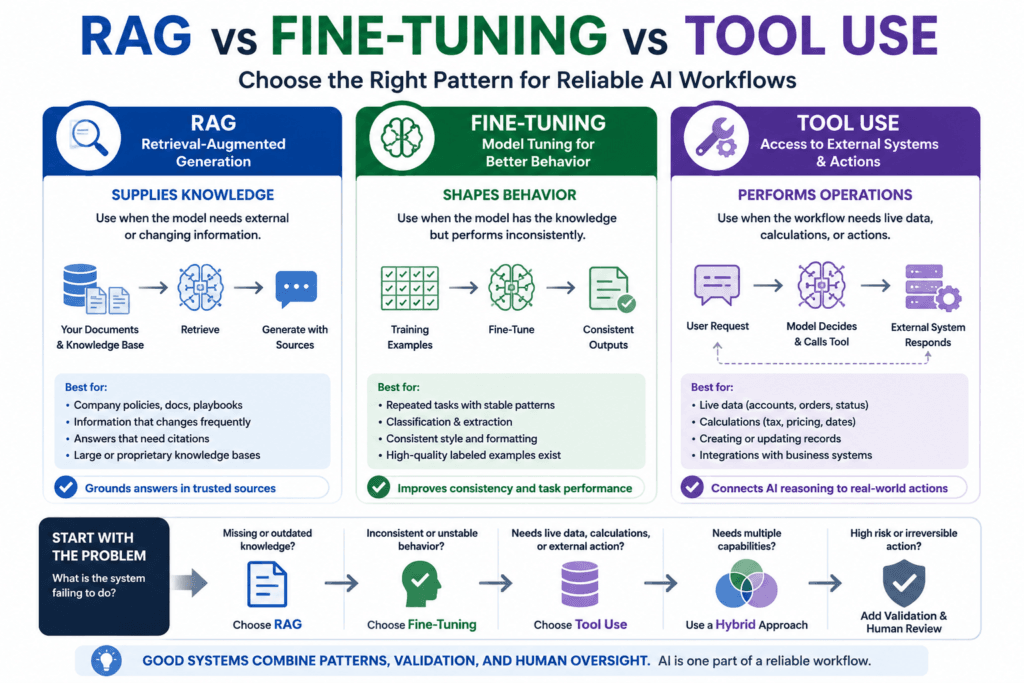
RAG, fine-tuning, and tool use solve different AI system problems. This lesson gives builders a practical decision framework for choosing the right pattern.
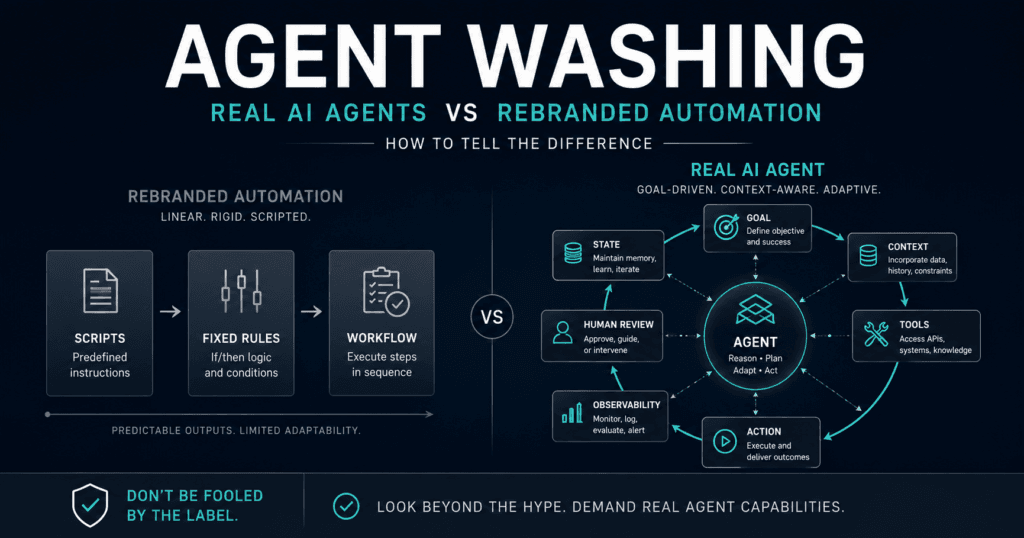
Agent washing happens when chatbots, scripts, copilots, and workflow automation are relabeled as AI agents without meaningful autonomy or accountability. The distinction matters because leaders may fund the wrong systems, underestimate risk, and mistake demos for production capability. Real agents need tools, context, controls, evaluation, and clear ownership.
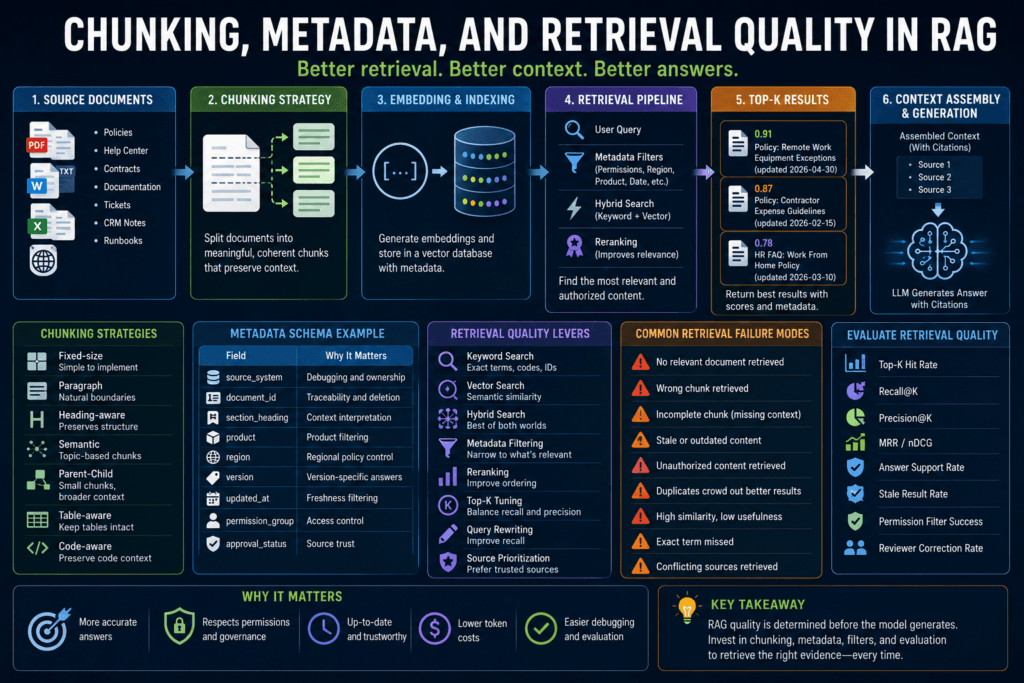
RAG systems often fail before the model writes anything. This lesson explains how chunking, metadata, filtering, ranking, freshness, permissions, and retrieval evaluation determine whether RAG systems return useful evidence or misleading context.

Shadow AI is not mainly a sign that employees want to create risk. It is a signal that the approved path is too slow, unclear, or weak for the work people need to do. Leaders need visibility, data boundaries, usable approved tools, workflow-based governance, and training that employees can actually follow.
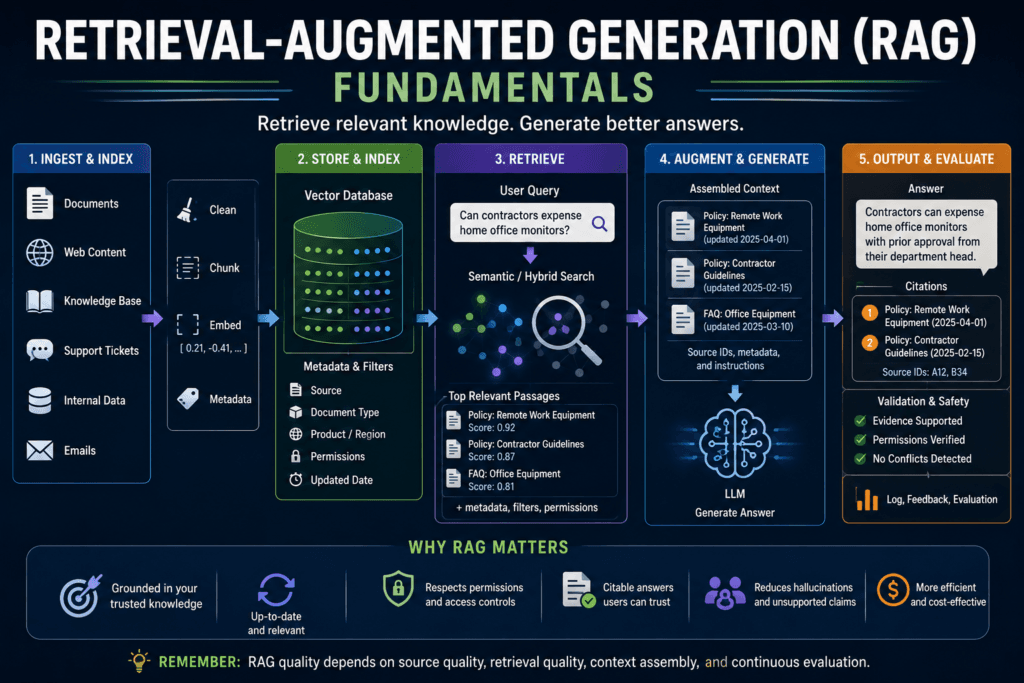
Retrieval-augmented generation, or RAG, helps AI systems answer with relevant external knowledge instead of relying only on model training data. This lesson explains how RAG works, where it helps, where it fails, and what production-ready implementation requires.
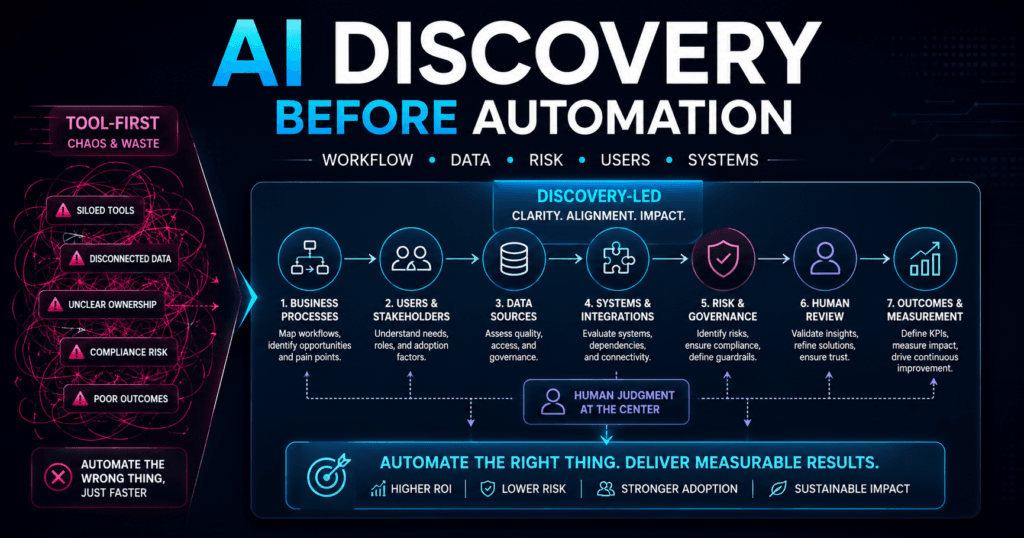
AI discovery should not start with tools, models, agents, or automation ideas. It should start with how the business actually works. The best discovery process finds the workflow, data, risk, users, systems, and measurable outcome behind the request before deciding what should be automated, assisted, governed, or left alone.
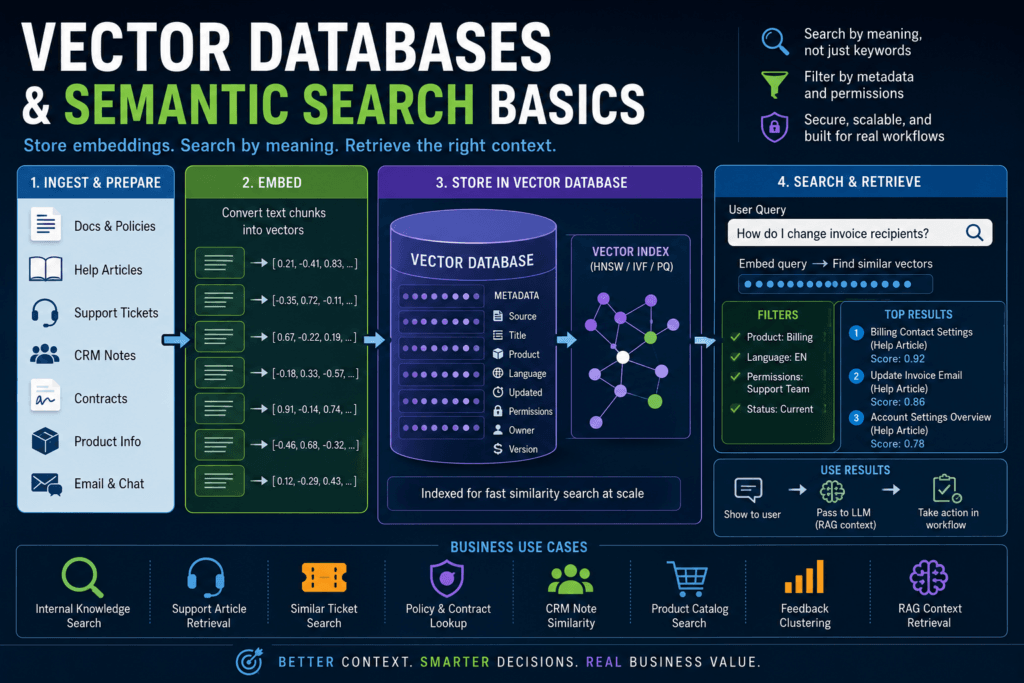
Vector databases make embedding-based search practical by storing vectors, indexing them for similarity search, applying metadata filters, and retrieving relevant business context for people, workflows, and RAG systems.