Category: AI

All things AI from my professional perspective.
Agent-to-Agent Delegation Needs Accountability Before Autonomy

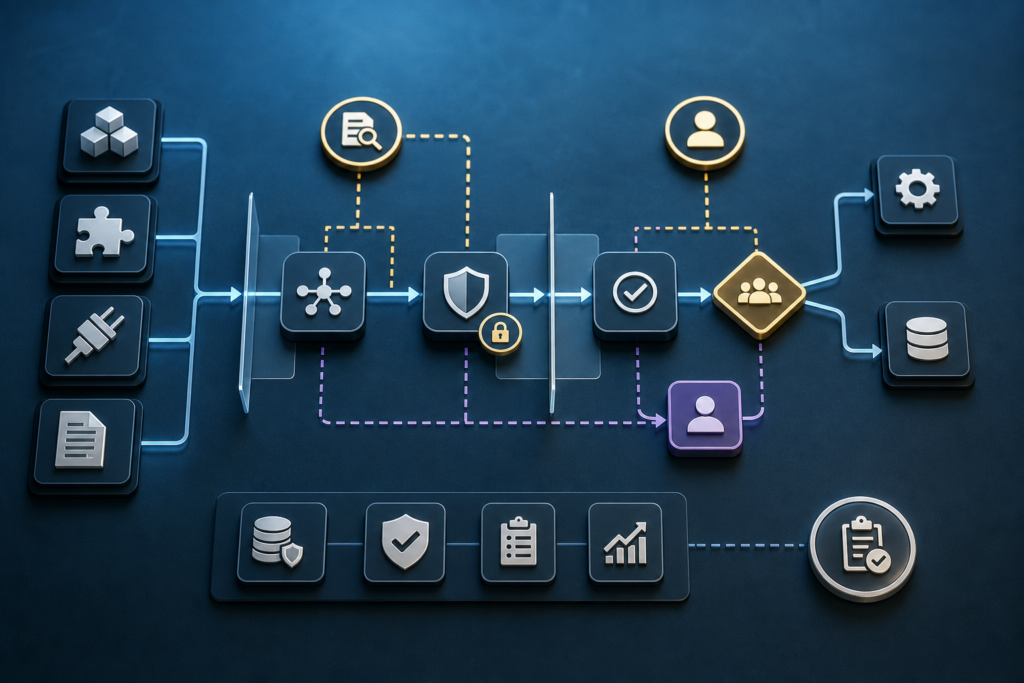
Agent-to-agent delegation accountability map showing AI agents, permission boundaries, evidence logs, human review gates, and business workflow ownership.

Agent-to-agent delegation may help AI workflows cross tools, teams, and vendors, but it also creates a chain-of-accountability problem. Before leaders approve more autonomy, they need proof of identity, delegated authority, permission scope, evidence capture, review paths, rollback, and failure ownership. Interoperability is useful. It is not the same as production readiness.

Read more

AI Content Provenance Is Becoming a Business Trust Control

AI content provenance workflow showing source files, edit history, verification checks, human approval, and publishing evidence chain.

AI content provenance is moving beyond labels and watermarks. For business leaders, the real issue is whether high-trust content workflows can preserve evidence of origin, edits, approvals, tool use, and verification. This article explains what provenance can prove, what it cannot, and how teams should turn it into a practical workflow control.

Read more

AI Change Management Is the Real Bottleneck Now

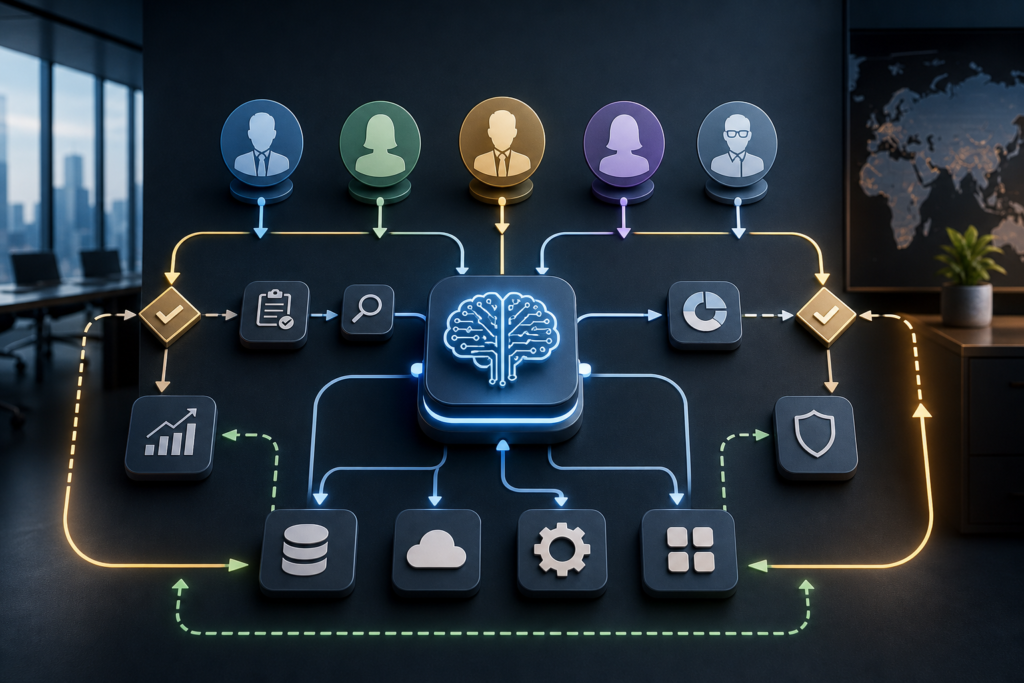
AI change management workflow map showing business roles, review gates, adoption metrics, and technical systems connected around an AI tool.

Many AI initiatives stall after the demo because the organization never changes how work actually happens. This article argues that AI change management is the discipline that turns model capability into daily operating change through workflow redesign, ownership, training, governance, trust, incentives, and measurable business outcomes.

Read more

Context Engineering for Enterprise AI Is the Real Work

Context engineering for enterprise AI shown as a workflow map with data sources, permissions, tools, memory, human review, and audit logs.

Most enterprise AI failures are not caused by weak prompts alone. They come from poor context: stale data, broad permissions, unclear tool access, missing audit trails, and workflows no one owns. This article explains why context engineering is becoming the practical discipline behind reliable enterprise AI agents and what leaders should fund before scaling.

Read more

AI Data Boundaries Beat Risky Model Selection

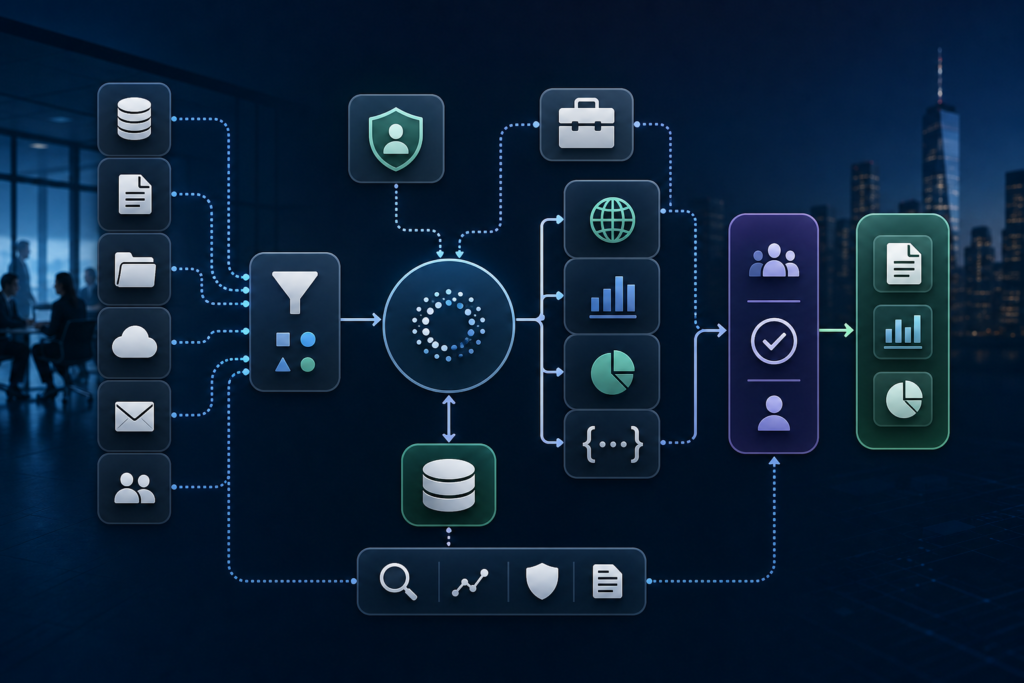
AI data boundaries shown as a workflow map with data sources, retrieval filters, model access, logging, human review, and action controls.

Most AI strategy conversations still start with model selection. That is understandable, but incomplete. Once AI systems connect to CRMs, helpdesks, documents, finance workflows, and customer records, the bigger strategic issue is permissioned context. AI data boundaries determine whether the system creates business value, privacy exposure, operational risk, or all three at once.

Read more

AI Red Teaming Is a Business Readiness Practice, Not a Security Stunt

AI red teaming workflow map showing prompts, retrieval, permissions, tool calls, human review, evidence logs, and launch gates.

AI red teaming is often framed as a security exercise. That is too narrow for production AI. Once AI systems can retrieve data, call tools, influence decisions, or interact with customers, red teaming becomes a readiness test for the whole operating model: governance, permissions, escalation, observability, remediation, and launch discipline.

Read more

Prompt Injection Business Risk, Not a Prompting Problem

Workflow control diagram showing prompt injection business risk across untrusted content, AI tools, approval gates, and audit logs.

Prompt injection becomes a business problem when AI systems read untrusted content and hold authority to act. Better prompts help, but they cannot carry the burden of security, governance, or operational control. Leaders need to judge AI workflows by data access, tool permissions, human review, observability, and the blast radius of failure.

Read more

AI Incident Response Is the Missing Discipline

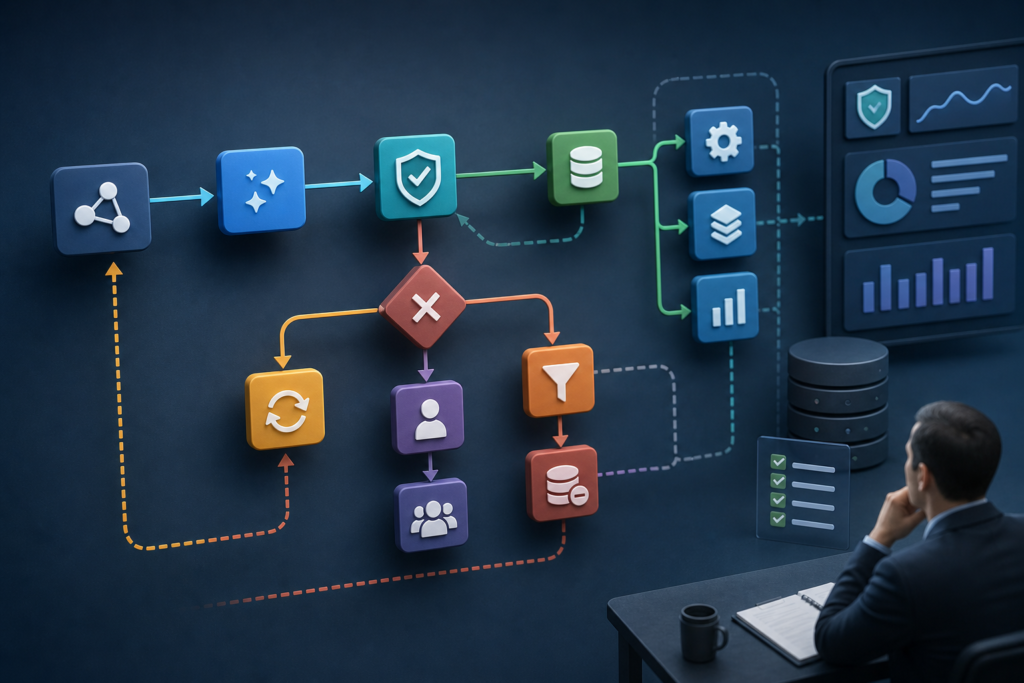
AI incident response workflow map showing detection, triage, containment, evidence capture, remediation, and governance updates.

Most companies are building AI governance for approval day, but the real test is incident day. AI incident response gives leaders and builders a practical operating loop for classifying failures, preserving evidence, containing harm, assigning ownership, fixing controls, and learning from production AI behavior before the same failure repeats.

Read more

Practical Multi-Step AI Workflows Without Agent Sprawl

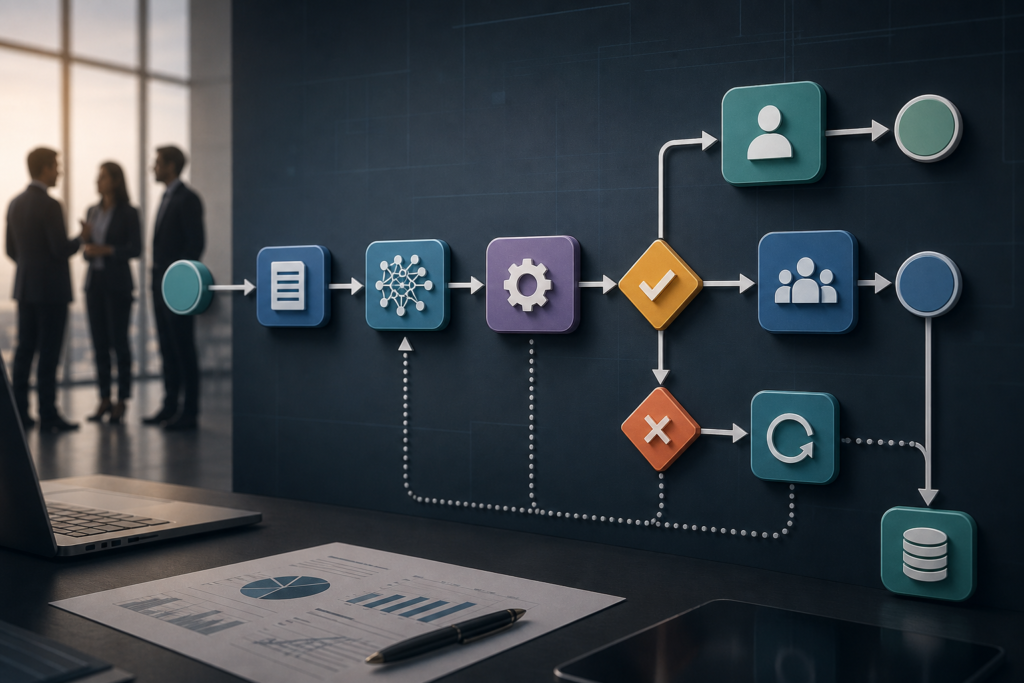
Diagram of multi-step AI workflows using deterministic orchestration, bounded AI steps, validation gates, human approval, and audit logs.

Multi-step AI workflows do not automatically require autonomous agents. This lesson teaches a practical design pattern: map the business process, use deterministic orchestration as the backbone, add bounded LLM calls where judgment helps, preserve workflow state, validate outputs, route exceptions, and require human approval before high-impact actions.

Read more

Human-in-the-Loop AI Workflows: Reliable Approval Systems

Human-in-the-loop AI workflows approval system showing AI proposals routed through validation, human review, escalation, and audit logs.

Human-in-the-loop AI workflows are often treated as a simple approval button. That misses the real design problem. This lesson explains how to build approval systems with risk rules, review queues, context, decision states, escalation, audit trails, and measurement so AI can assist real business operations without getting unchecked authority over customers, money, records, or external actions.

Read more