Category: Education

Posts filed under Education.
AI Workflow Exception Handling: Reliable Recovery Patterns

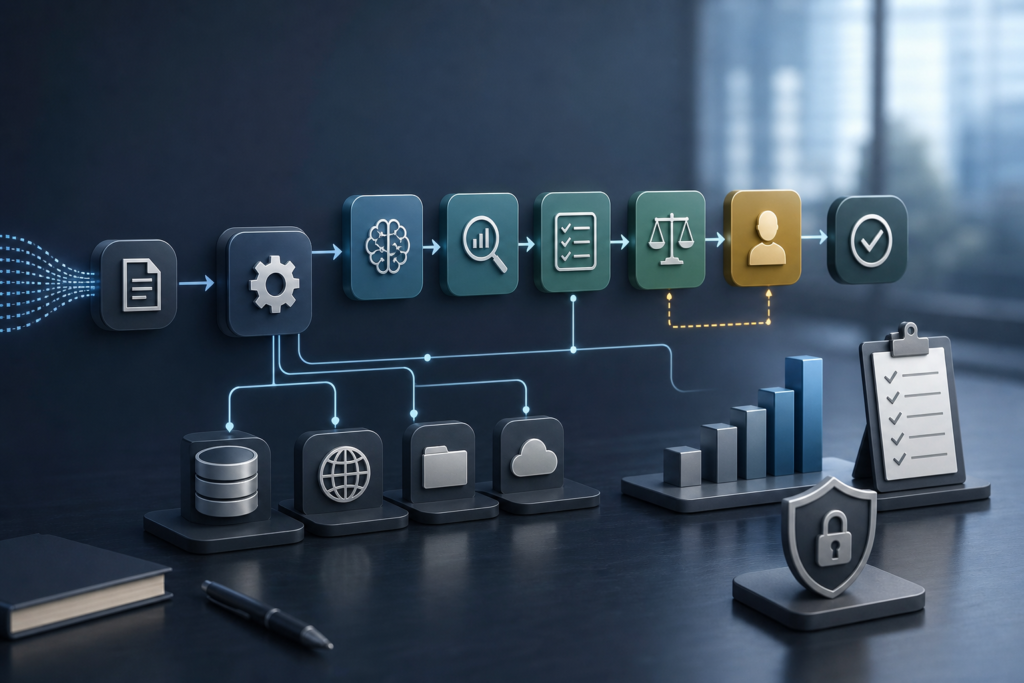
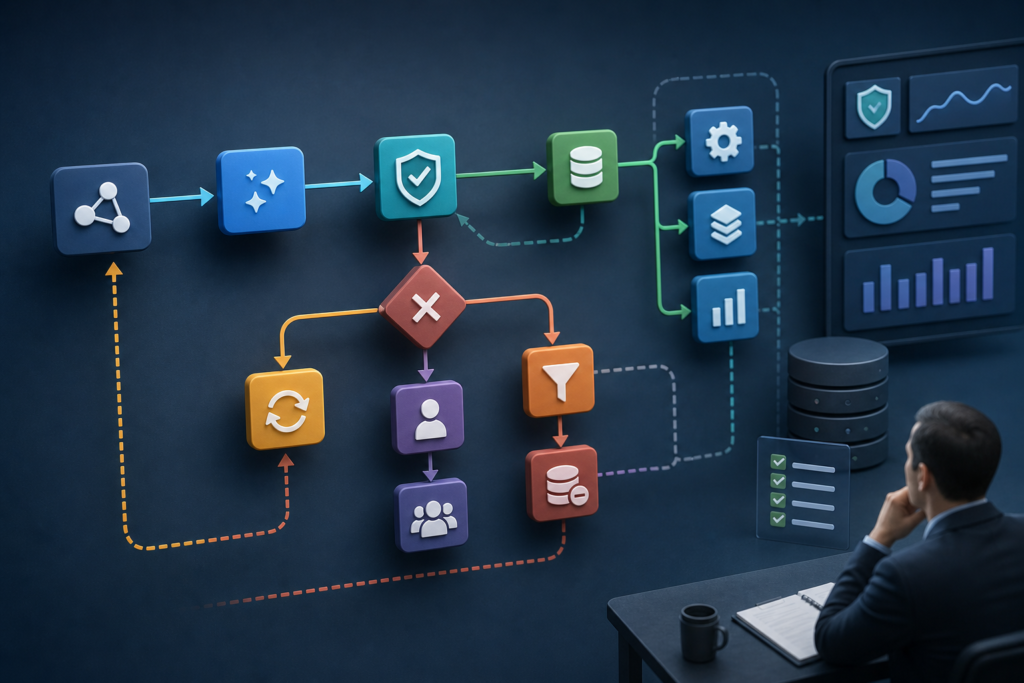
AI workflow exception handling diagram showing retries, validation, human review, dead-letter queue, and recovery paths.

AI workflows fail in ordinary ways before they fail in dramatic ways. Model outputs may be invalid, APIs may time out, webhooks may arrive twice, reviewers may delay decisions, and downstream writes may partially succeed. This lesson teaches practical exception handling and recovery patterns for production AI workflows so teams can design safer retries, escalation paths, human review, and evidence capture before scaling automation.

Read more

AI Workflow State Machines: Implementation Guide

Diagram of AI workflow state machines showing states, transitions, validation gates, human review, retries, and system write-back.

Multi-step AI systems often fail because the model is quietly acting as the workflow controller. This lesson explains how AI workflow state machines help teams track where work is, what happened, what can happen next, what requires review, and how to retry safely. Learn the state-machine pattern through definitions, examples, checklists, failure modes, and a practical design exercise.

Read more

Practical Multi-Step AI Workflows Without Agent Sprawl

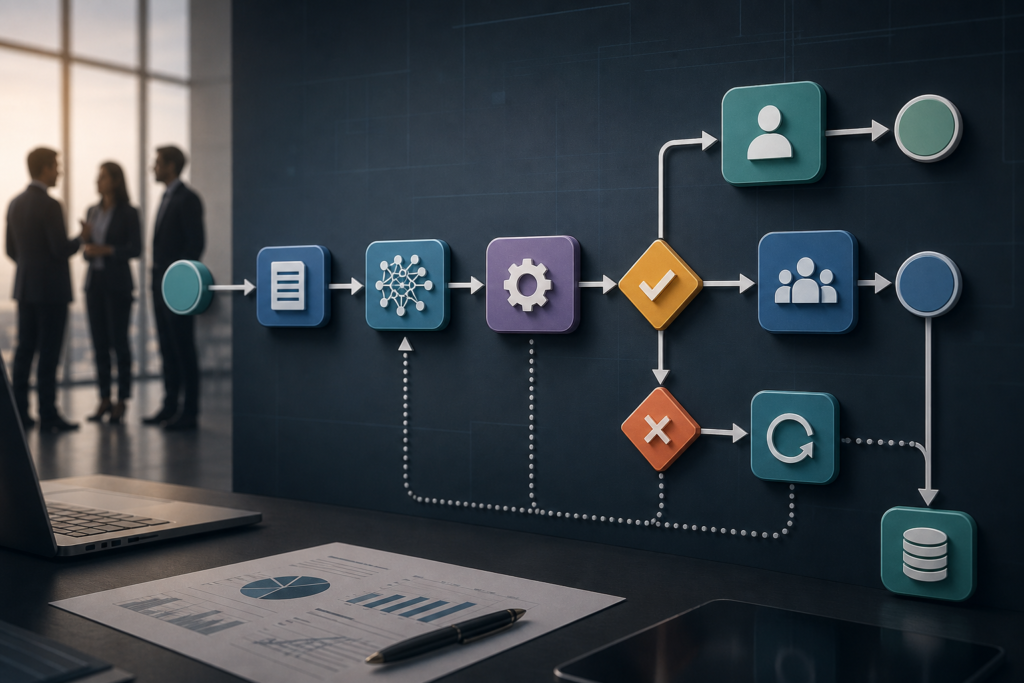
Diagram of multi-step AI workflows using deterministic orchestration, bounded AI steps, validation gates, human approval, and audit logs.

Multi-step AI workflows do not automatically require autonomous agents. This lesson teaches a practical design pattern: map the business process, use deterministic orchestration as the backbone, add bounded LLM calls where judgment helps, preserve workflow state, validate outputs, route exceptions, and require human approval before high-impact actions.

Read more

Human-in-the-Loop AI Workflows: Reliable Approval Systems

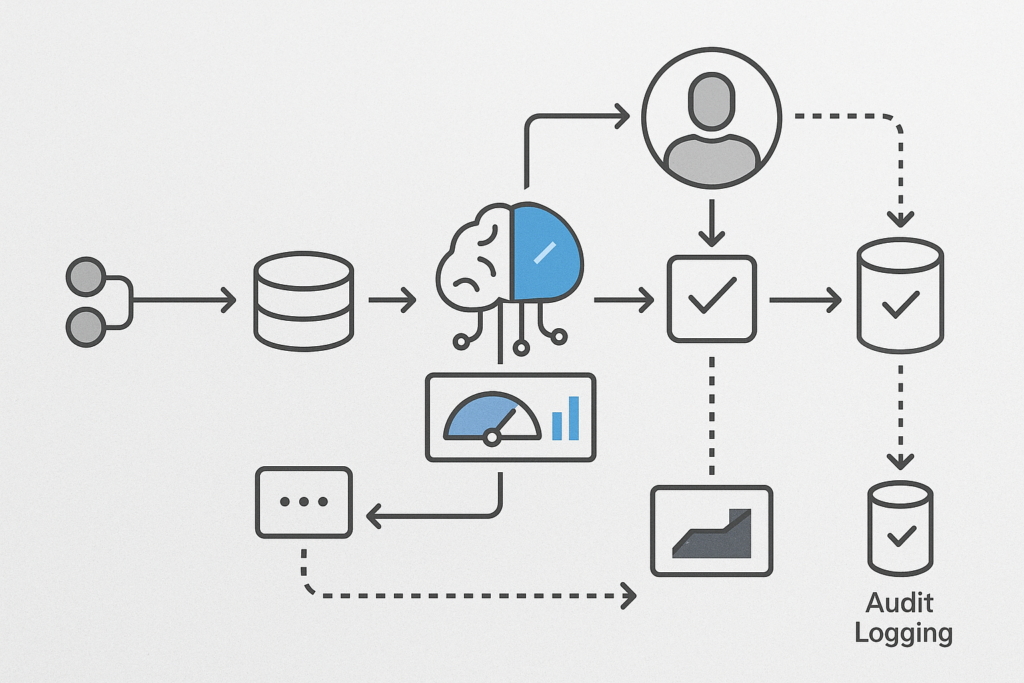
Human-in-the-loop AI workflows approval system showing AI proposals routed through validation, human review, escalation, and audit logs.

Human-in-the-loop AI workflows are often treated as a simple approval button. That misses the real design problem. This lesson explains how to build approval systems with risk rules, review queues, context, decision states, escalation, audit trails, and measurement so AI can assist real business operations without getting unchecked authority over customers, money, records, or external actions.

Read more

AI Agent Guardrails for Safe Workflow Permissions

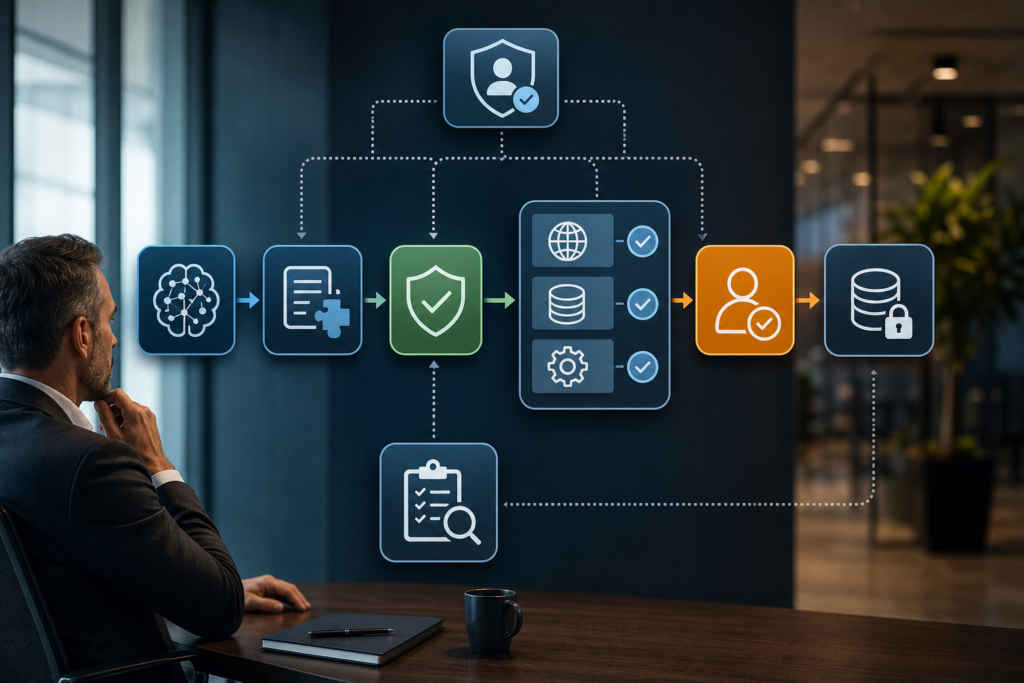
AI agent guardrails diagram showing safe permissions, approval gates, business systems, and audit logs in an AI workflow.

AI agents become more useful when they can act, but action creates risk. This lesson explains how to design AI agent guardrails around permissions, tool access, approval gates, logging, and rollback paths. You will learn how to classify agent actions, apply least privilege, and build a practical permission matrix before connecting agents to live business systems.

Read more

AI Function Calling: Practical Tool-Use Lesson

AI function calling workflow diagram showing a model request, validation layer, business tools, APIs, audit logs, and human review.

AI function calling lets an AI system request live data, calculations, or workflow actions through structured tool calls. This lesson explains how the model, application, APIs, permissions, validation, human review, and audit logs fit together so leaders and builders can design safer business AI systems without confusing demos with production readiness.

Read more

AI Decision Support: When AI Should Recommend, Not Decide

Diagram of AI decision support workflow with approval gates and confidence thresholds

Leaders feel pressure to “automate decisions,” but most value emerges when AI recommends and a human decides. Wait to grant more autonomy until evidence, controls, and reversibility justify it. This editorial explains where AI should stop, how to design human-in-the-loop review that actually works, and the governance, thresholds, and proofs required before shifting from recommendation to decision.

Read more

AI Agents vs Workflows: A Practical, Reliable Decision Guide

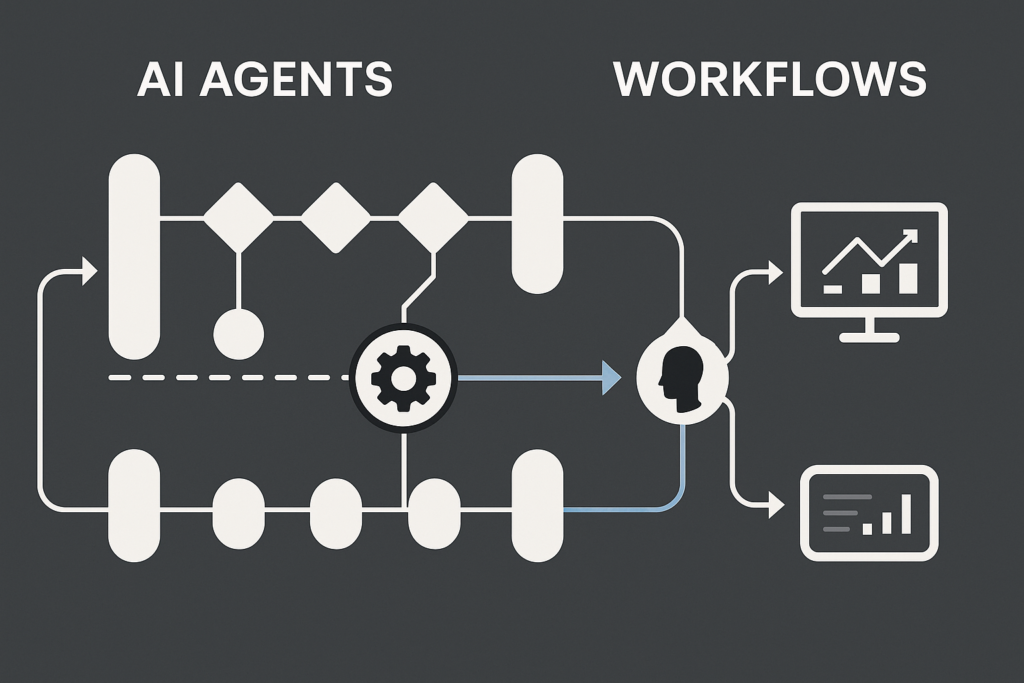
Hybrid architecture diagram illustrating AI agents vs workflows with a deterministic backbone and one bounded agentic step

Should you build a deterministic workflow or an autonomous AI agent? This lesson gives leaders and builders a reliable decision framework, clear definitions, a comparison table, and a worked hybrid example (support triage with one agentic step). You’ll learn how autonomy affects reliability, governance, cost, and change control, and you will leave with an implementation checklist, exercise, and knowledge check.

Read more