AI resources

Find practical AI implementation guides

Use this AI resource finder to start with the structured Education library, then switch to Editorial analysis or the full AI archive when needed.

Browse by type

Start with the structured Education library, then switch to Editorial analysis or the complete AI archive when needed.

View full AI archive
Article index Latest AI education Showing all AI posts
  1. Agent-to-Agent Delegation Needs Accountability Before Autonomy [2026-06-26]
  2. AI Content Provenance Is Becoming a Business Trust Control [2026-06-25]
  3. AI Change Management Is the Real Bottleneck Now [2026-06-23]
  4. Context Engineering for Enterprise AI Is the Real Work [2026-06-22]
  5. AI Data Boundaries Beat Risky Model Selection [2026-06-18]
  6. AI Red Teaming Is a Business Readiness Practice, Not a Security Stunt [2026-06-15]
  7. Prompt Injection Business Risk, Not a Prompting Problem [2026-06-12]
  8. AI Incident Response Is the Missing Discipline [2026-06-11]
  9. Practical Multi-Step AI Workflows Without Agent Sprawl [2026-06-10]
  10. Human-in-the-Loop AI Workflows: Reliable Approval Systems [2026-06-09]
  11. AI Observability Is Automation’s Critical Control Layer [2026-06-08]
  12. AI Evals Are the Critical Layer Between Demo and Production [2026-06-05]
  13. AI Agent Guardrails for Safe Workflow Permissions [2026-06-04]
  14. Quantum-Enhanced LLMs: Real Signal, Weak Strategy [2026-06-03]
  15. AI Function Calling: Practical Tool-Use Lesson [2026-06-02]
  16. The Practical AI Operating Model for Mid-Market Companies [2026-06-01]
  17. AI World Models: The Strategic Shift from Next Token to Next State [2026-05-28]
  18. AI Decision Support: When AI Should Recommend, Not Decide [2026-05-27]
  19. AI Agents vs Workflows: A Practical, Reliable Decision Guide [2026-05-26]
  20. Sales AI: Reliable Notes and CRM Enrichment Guide [2026-05-22]
  21. Customer Support AI: Reliable Triage and Drafting Guide [2026-05-21]
  22. Model Context Protocol: The Critical Connector Shift [2026-05-21]
  23. Internal Knowledge Assistant: Reliable Team AI Guide [2026-05-20]
  24. AI Procurement Is Broken: Demand Real Evidence [2026-05-20]
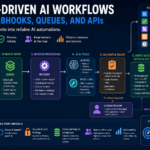
  25. Event-Driven AI Workflows: Reliable Guide [2026-05-19]
  26. The AI Pilot Trap: Why Strong Demos Still Fail [2026-05-19]
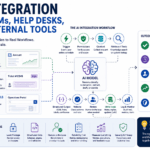
  27. AI Integration: Reliable CRM and Helpdesk Guide [2026-05-18]
  28. AI Governance Is Infrastructure, Not Paperwork [2026-05-18]
  29. Natural Language Autoencoders: A Critical Trust Lesson [2026-05-15]
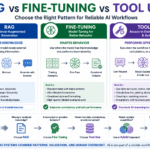
  30. RAG vs Fine-Tuning: Reliable Guide to Tool Use [2026-05-15]
  31. Agent Washing: Real AI Agents vs. Rebranded Automation [2026-05-15]
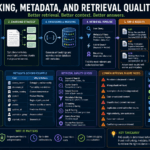
  32. RAG Retrieval Quality: Powerful Chunking Guide [2026-05-14]

AI → All

All AI posts

Browse the complete AI resource library, including practical lessons and strategic analysis.

Agent-to-agent delegation accountability map showing AI agents, permission boundaries, evidence logs, human review gates, and business workflow ownership.

Agent-to-Agent Delegation Needs Accountability Before Autonomy

Agent-to-agent delegation may help AI workflows cross tools, teams, and vendors, but it also creates a chain-of-accountability problem. Before leaders approve more autonomy, they need proof of identity, delegated authority, permission scope, evidence capture, review paths, rollback, and failure ownership. Interoperability is useful. It is not the same as production readiness.

Read more

AI content provenance workflow showing source files, edit history, verification checks, human approval, and publishing evidence chain.

AI Content Provenance Is Becoming a Business Trust Control

AI content provenance is moving beyond labels and watermarks. For business leaders, the real issue is whether high-trust content workflows can preserve evidence of origin, edits, approvals, tool use, and verification. This article explains what provenance can prove, what it cannot, and how teams should turn it into a practical workflow control.

Read more

AI change management workflow map showing business roles, review gates, adoption metrics, and technical systems connected around an AI tool.

AI Change Management Is the Real Bottleneck Now

Many AI initiatives stall after the demo because the organization never changes how work actually happens. This article argues that AI change management is the discipline that turns model capability into daily operating change through workflow redesign, ownership, training, governance, trust, incentives, and measurable business outcomes.

Read more

Context engineering for enterprise AI shown as a workflow map with data sources, permissions, tools, memory, human review, and audit logs.

Context Engineering for Enterprise AI Is the Real Work

Most enterprise AI failures are not caused by weak prompts alone. They come from poor context: stale data, broad permissions, unclear tool access, missing audit trails, and workflows no one owns. This article explains why context engineering is becoming the practical discipline behind reliable enterprise AI agents and what leaders should fund before scaling.

Read more

AI data boundaries shown as a workflow map with data sources, retrieval filters, model access, logging, human review, and action controls.

AI Data Boundaries Beat Risky Model Selection

Most AI strategy conversations still start with model selection. That is understandable, but incomplete. Once AI systems connect to CRMs, helpdesks, documents, finance workflows, and customer records, the bigger strategic issue is permissioned context. AI data boundaries determine whether the system creates business value, privacy exposure, operational risk, or all three at once.

Read more

AI red teaming workflow map showing prompts, retrieval, permissions, tool calls, human review, evidence logs, and launch gates.

AI Red Teaming Is a Business Readiness Practice, Not a Security Stunt

AI red teaming is often framed as a security exercise. That is too narrow for production AI. Once AI systems can retrieve data, call tools, influence decisions, or interact with customers, red teaming becomes a readiness test for the whole operating model: governance, permissions, escalation, observability, remediation, and launch discipline.

Read more

Workflow control diagram showing prompt injection business risk across untrusted content, AI tools, approval gates, and audit logs.

Prompt Injection Business Risk, Not a Prompting Problem

Prompt injection becomes a business problem when AI systems read untrusted content and hold authority to act. Better prompts help, but they cannot carry the burden of security, governance, or operational control. Leaders need to judge AI workflows by data access, tool permissions, human review, observability, and the blast radius of failure.

Read more

AI incident response workflow map showing detection, triage, containment, evidence capture, remediation, and governance updates.

AI Incident Response Is the Missing Discipline

Most companies are building AI governance for approval day, but the real test is incident day. AI incident response gives leaders and builders a practical operating loop for classifying failures, preserving evidence, containing harm, assigning ownership, fixing controls, and learning from production AI behavior before the same failure repeats.

Read more

Diagram of multi-step AI workflows using deterministic orchestration, bounded AI steps, validation gates, human approval, and audit logs.

Practical Multi-Step AI Workflows Without Agent Sprawl

Multi-step AI workflows do not automatically require autonomous agents. This lesson teaches a practical design pattern: map the business process, use deterministic orchestration as the backbone, add bounded LLM calls where judgment helps, preserve workflow state, validate outputs, route exceptions, and require human approval before high-impact actions.

Read more

Human-in-the-loop AI workflows approval system showing AI proposals routed through validation, human review, escalation, and audit logs.

Human-in-the-Loop AI Workflows: Reliable Approval Systems

Human-in-the-loop AI workflows are often treated as a simple approval button. That misses the real design problem. This lesson explains how to build approval systems with risk rules, review queues, context, decision states, escalation, audit trails, and measurement so AI can assist real business operations without getting unchecked authority over customers, money, records, or external actions.

Read more

AI observability control layer diagram showing prompts, retrieval, model calls, tool calls, approvals, costs, and workflow outcomes.

AI Observability Is Automation’s Critical Control Layer

AI observability is becoming a control layer for business automation, not a side dashboard for engineers. Once AI systems retrieve data, call tools, trigger workflows, or influence decisions, leaders need evidence of what happened, what the system used, what it changed, what it cost, and where human review entered the process.

Read more

AI evals workflow gate showing demo inputs, evaluation checks, human review, production monitoring, and business decision points.

AI Evals Are the Critical Layer Between Demo and Production

A demo can prove that AI works once. It cannot prove the workflow can be trusted repeatedly. This article explains why AI evals should be treated as a management layer, not a technical afterthought, and how leaders can use them to make better funding, governance, vendor, and production decisions.

Read more

AI agent guardrails diagram showing safe permissions, approval gates, business systems, and audit logs in an AI workflow.

AI Agent Guardrails for Safe Workflow Permissions

AI agents become more useful when they can act, but action creates risk. This lesson explains how to design AI agent guardrails around permissions, tool access, approval gates, logging, and rollback paths. You will learn how to classify agent actions, apply least privilege, and build a practical permission matrix before connecting agents to live business systems.

Read more

Decision map for quantum-enhanced LLMs showing a classical model, quantum adapter, evaluation gates, workflow metrics, and human review points.

Quantum-Enhanced LLMs: Real Signal, Weak Strategy

A recent IBM quantum hardware experiment improved Llama 3.1 8B in a narrow research setup, but the business lesson is more disciplined than the headline suggests. Quantum-enhanced LLMs deserve attention as a compute signal, not as a procurement trigger. Leaders should watch the evidence, compare classical alternatives, and measure workflow value before funding quantum AI claims.

Read more

AI function calling workflow diagram showing a model request, validation layer, business tools, APIs, audit logs, and human review.

AI Function Calling: Practical Tool-Use Lesson

AI function calling lets an AI system request live data, calculations, or workflow actions through structured tool calls. This lesson explains how the model, application, APIs, permissions, validation, human review, and audit logs fit together so leaders and builders can design safer business AI systems without confusing demos with production readiness.

Read more

AI operating model for mid-market companies shown as a workflow map with ownership, governance, integration, evaluation, and human review points.

The Practical AI Operating Model for Mid-Market Companies

Mid-market companies do not need enterprise AI bureaucracy, but scattered pilots are not a strategy. This article argues for a lean AI operating model that defines ownership, prioritization, governance, workflow integration, evaluation, and measurement before AI tools scale across the business.

Read more

AI world models workflow map showing current state, actions, predicted next states, feedback loops, and human review points.

AI World Models: The Strategic Shift from Next Token to Next State

AI world models are becoming a serious strategy topic because many valuable AI problems are not language problems. They are state problems. This article explains the shift from next-token prediction to next-state prediction, where world-model thinking matters, where the hype outruns production reality, and what leaders and builders should evaluate before funding state-aware AI systems.

Read more

Diagram of AI decision support workflow with approval gates and confidence thresholds

AI Decision Support: When AI Should Recommend, Not Decide

Leaders feel pressure to “automate decisions,” but most value emerges when AI recommends and a human decides. Wait to grant more autonomy until evidence, controls, and reversibility justify it. This editorial explains where AI should stop, how to design human-in-the-loop review that actually works, and the governance, thresholds, and proofs required before shifting from recommendation to decision.

Read more

Hybrid architecture diagram illustrating AI agents vs workflows with a deterministic backbone and one bounded agentic step

AI Agents vs Workflows: A Practical, Reliable Decision Guide

Should you build a deterministic workflow or an autonomous AI agent? This lesson gives leaders and builders a reliable decision framework, clear definitions, a comparison table, and a worked hybrid example (support triage with one agentic step). You’ll learn how autonomy affects reliability, governance, cost, and change control, and you will leave with an implementation checklist, exercise, and knowledge check.

Read more

Model Context Protocol connector architecture showing AI systems linked to business workflows, approval gates, data sources, and audit logs.

Model Context Protocol: The Critical Connector Shift

Model Context Protocol is not just another developer convenience. It is a sign that AI value is moving from isolated chatbot experiences toward governed connector infrastructure. The real question for businesses is no longer whether a model can respond well, but whether it can safely reach the right systems, follow the right rules, and leave an auditable trail.

Read more

AI procurement evidence review board comparing vendor demos against workflow tests, governance checks, cost metrics, and integration proof

AI Procurement Is Broken: Demand Real Evidence

AI procurement often rewards the most impressive demo instead of the strongest operational proof. That is how companies buy tools that look useful in a sales call but fail inside real workflows. This article argues for an evidence-first buying model built around representative tests, integration reality, governance, cost, reliability, and clear ownership before scale.

Read more

AI pilot trap visual showing a business workflow map moving from demo to governed operating system with review, metrics, and integration points

The AI Pilot Trap: Why Strong Demos Still Fail

The AI pilot trap starts when companies treat a successful demo as evidence of operational readiness. A pilot can prove that a model can perform a task, but production value requires ownership, workflow integration, measurement, governance, review paths, cost discipline, and trust. This article explains why AI pilots stall and what separates experiments from durable business systems.

Read more

AI governance control plane showing workflow permissions, evaluation, logging, human review, and incident response across a business system

AI Governance Is Infrastructure, Not Paperwork

A company can have an AI policy and still have weak AI governance. The real test is whether governance changes how AI systems access data, use tools, route decisions, log behavior, involve humans, and recover from failure. As AI moves into production workflows, governance has to become part of the operating infrastructure.

Read more

Natural language autoencoders shown as an AI audit workflow with hidden activations, readable explanations, validation checks, and human review.

Natural Language Autoencoders: A Critical Trust Lesson

Natural language autoencoders are being described as an AI microscope, but the business lesson is not that Claude thinks like a person. The real lesson is harder: fluent answers, polished explanations, and strong benchmarks are not enough evidence of reliable AI behavior. Leaders and builders need workflow-level evaluation, observability, grounding, and audit controls.

Read more

Agent washing illustrated as a business workflow diagram comparing real AI agents with rebranded automation.

Agent Washing: Real AI Agents vs. Rebranded Automation

Agent washing happens when chatbots, scripts, copilots, and workflow automation are relabeled as AI agents without meaningful autonomy or accountability. The distinction matters because leaders may fund the wrong systems, underestimate risk, and mistake demos for production capability. Real agents need tools, context, controls, evaluation, and clear ownership.

Read more

A business workflow map showing shadow AI risk paths, approved AI tools, data boundaries, and human review checkpoints.

Shadow AI Is a Leadership Problem, Not Just IT

Shadow AI is not mainly a sign that employees want to create risk. It is a signal that the approved path is too slow, unclear, or weak for the work people need to do. Leaders need visibility, data boundaries, usable approved tools, workflow-based governance, and training that employees can actually follow.

Read more

retrieval-augmented generation workflow showing retrieval, context assembly, generation, citations, and evaluation

Retrieval-Augmented Generation: Reliable RAG Guide

Retrieval-augmented generation, or RAG, helps AI systems answer with relevant external knowledge instead of relying only on model training data. This lesson explains how RAG works, where it helps, where it fails, and what production-ready implementation requires.

Read more

AI discovery workflow map showing business process automation decisions, data readiness, risk controls, and human review points

AI Discovery Is Where Automation Succeeds or Fails

AI discovery should not start with tools, models, agents, or automation ideas. It should start with how the business actually works. The best discovery process finds the workflow, data, risk, users, systems, and measurable outcome behind the request before deciding what should be automated, assisted, governed, or left alone.

Read more

Vector databases and semantic search workflow showing business documents stored as embeddings for retrieval

Vector Databases: Powerful Guide to Smart Search

Vector databases make embedding-based search practical by storing vectors, indexing them for similarity search, applying metadata filters, and retrieving relevant business context for people, workflows, and RAG systems.

Read more

AI implementation partner decision map showing business request translation into right-sized workflow solutions

The AI Implementation Partner Who Can Tell You No

A good AI implementation partner should not simply build everything a business asks for. They should understand the workflow, challenge unnecessary complexity, and design the smallest responsible solution that achieves the business outcome. Sometimes that means less than expected. Sometimes it means more governance than expected. The point is fit, not flash.

Read more

AI embeddings workflow showing business documents converted into vectors for semantic search and retrieval

AI Embeddings: Powerful Guide for Business Search

AI embeddings turn text and other business data into numerical vectors that can be compared by similarity. This lesson explains how embeddings support semantic search, retrieval, clustering, deduplication, recommendations, and RAG-style workflows in real business systems.

Read more

Self-host AI decision framework showing cloud, private, local, and hybrid model deployment options for business workflows

Should Your Business Self-Host AI? A Practical Framework

Self-hosting AI sounds safer, cheaper, and more independent. Sometimes it is. Often, it is an expensive operational commitment disguised as a privacy strategy. This article gives business and technical leaders a practical framework for choosing between managed AI, private cloud, local models, on-prem infrastructure, and hybrid model routing.

Read more

Dark workflow canvas showing n8n workflow automation with trigger, AI decision, human review, API action, and logging nodes.

n8n Workflow Automation: Practical Business Guide

n8n workflow automation helps teams connect triggers, apps, APIs, AI calls, decisions, and actions into repeatable business workflows. This lesson explains what n8n is, where it fits, when to use it, when not to use it, and how to design a first workflow with validation, review, logging, and production safety in mind.

Read more

Agent memory control plane diagram showing hooks capturing AI coding agent events, consolidating memory, and reinjecting context across tools.

Agent Memory Control Plane: Critical AI Shift

AI coding agents do not just need bigger context windows or better prompt files. They need a controlled memory layer that survives across sessions, tools, and vendors. This article explains why hooks may matter more than MCP alone, how durable agent memory should work, and why memory ownership is becoming a serious business architecture decision.

Read more

AI document processing workflow turning invoices, contracts, and forms into validated structured business data

AI Document Processing: Reliable Guide for Business

AI document processing can help businesses extract structured data from invoices, contracts, forms, and document packets. The useful pattern is not “ask the PDF a question.” It is a controlled workflow that classifies documents, extracts fields, preserves evidence, validates results, routes exceptions, and writes back only when safe.

Read more

Diagram showing LLM scaling as larger AI models reduce interference between overlapping concept representations in business workflows

LLM Scaling: Why Bigger AI Models Keep Improving

LLM scaling is not just a brute-force story. MIT research on superposition suggests bigger AI models may improve because they give overlapping internal representations more room to interfere less. That helps explain why scale still matters, but it also shows why businesses need model selection, evaluation, workflow design, and cost discipline.

Read more

AI model selection decision framework for business AI workflows comparing quality, cost, latency, and risk

AI Model Selection: Powerful Guide for Smart Business AI

Choosing an AI model is not about picking the biggest or newest option. This lesson teaches a practical model-selection framework for business AI workflows, including task fit, cost, latency, risk, context, evaluation, and when stronger models are actually justified.

Read more

Structured outputs for AI workflows shown as JSON Schema, validation checks, and business system routing

Structured Outputs for AI Workflows: Reliable Guide

Structured outputs for AI workflows help turn free-form model responses into validated, machine-readable data. This lesson explains how JSON Schema, validation, retries, and business rules make AI systems far more reliable in production.

Read more

Diagram of production prompting for business AI with schema-constrained outputs and guardrails

Production Prompting: Essential Business AI Guide

This lesson explains why production prompting is different from consumer chat prompting. It shows how to design prompts as operational specifications with explicit tasks, grounded context, structured outputs, guardrails, examples, and version control so business AI systems behave more reliably in production.

Read more

Diagram explaining how LLMs work for builders with tokens, context windows, and grounding

How LLMs Work: Essential Guide for Builders

This lesson explains how LLMs work well enough for builders and operators to design better prompts, retrieval, validation, and workflows. It covers tokens, context windows, next-token prediction, hallucinations, grounding, and output variability with practical examples and API-oriented code.

Read more

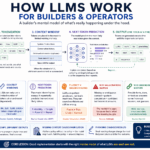
Diagram showing the anatomy of an AI workflow inside a business system

AI Workflow Anatomy: Essential Guide for Business

This lesson explains how an AI workflow actually operates inside a company. Instead of treating AI as a chatbot sitting off to the side, it breaks the system into inputs, triggers, retrieval, model calls, validation, human review, downstream actions, and measurement so teams can design workflows that are useful, controllable, and worth operating.
Read more

LLM understanding lessons for business and AI system design

LLM Understanding: 7 Critical Lessons for Business

Many companies deploy AI as if fluent output proves real understanding. Current research suggests a more useful mental model: LLMs are powerful probabilistic tools with limited grounding, which means better results come from constraints, retrieval, validation, and careful workflow design.

Read more

LLM scaling business lessons on diminishing returns and AI strategy

LLM Scaling: 7 Hard Lessons for Business

MIT/FutureTech research is being cited as evidence that conventional LLM scaling may be nearing diminishing returns. The stronger takeaway is narrower and more useful: brute-force compute may buy less strategic advantage over time, shifting value toward efficiency, integration, and commercial execution.

Read more

Amazon AI incidents and business lessons on bias privacy and governance

Amazon AI Incidents: 7 Hard Lessons for Business

Amazon AI incidents remain some of the clearest case studies in enterprise AI failure. From biased hiring models to privacy enforcement around Alexa and Ring, the known facts point to practical lessons about governance, deployment risk, data quality, and operational control.

Read more

Claude Code leak lessons for business AI governance and operational risk

Claude Code Leak: 7 Critical Lessons for Business

The Claude Code source leak was not a model-weights disaster. It was a revealing look at how real AI products work in production. For business leaders, the most important lessons are about permissions, telemetry, retention, governance, cost control, and operational maturity.

Read more

AI token costs dashboard showing token usage, context growth, and cost control decisions

AI Token Costs: The Hidden Incentive Problem

AI token costs are not just a technical metric. They sit at the center of a real incentive mismatch. Most inference providers get paid when applications send and generate more tokens, while users usually benefit from fewer tokens, faster responses, and lower bills. This guide explains where that mismatch shows up and how to control it.

Read more

Concept illustration for LLMs for AGI showing a large language model between practical business use cases and the limits of general intelligence

LLMs for AGI: The Useful but Uncomfortable Truth

Large language models may be extremely useful without being a clear path to artificial general intelligence. This article explains what today’s systems do well, where they still break down, why benchmark gains can mislead, and how to think about AI strategy without buying into AGI hype.

Read more

Diagram explaining AI tokens, tokenization, context windows, and model cost tradeoffs

AI Tokens: The Essential Guide to Lower Cost

AI tokens are the operating units behind modern language models. They affect context windows, pricing, latency, multilingual behavior, embeddings, training, inference, and the practical design tradeoffs behind real AI products.

Read more

Diagram explaining how LLMs work from tokens and embeddings to attention, training, and next-token prediction

How LLMs Work: The Definitive, Surprising Truth

This article explains how LLMs work without hype. It traces the path from early probabilistic language models and n-grams to embeddings, tokenization, transformers, scaling laws, and post-training, showing how next-token prediction became the foundation of modern AI systems.

Read more

Retail outlook 2026 for U.S. retail leaders reviewing sales, supply chain, and margin trends

Retail Outlook 2026: Hard Headwinds Ahead

U.S. retail is still expanding, but the easy-growth era is over. Retail outlook 2026 is defined less by whether demand exists and more by whether retailers can defend margin, manage volatility, and stay relevant as costs, consumer pressure, trade risk, shrink, and channel complexity all rise at once.

Read more

AI in retail connecting physical stores and digital channels in a phygital commerce experience

AI in Retail: Smart Wins for Modern Commerce

AI in retail is no longer confined to forecasting engines or back-office automation. It now sits much closer to the customer and the store, helping retailers connect physical locations, ecommerce, service, merchandising, and fulfillment into a more seamless phygital experience. This guide explains where AI is creating practical value in modern retail, where it still needs restraint, and how to deploy it without losing trust, control, or operational clarity.

Read more

Small language models running on edge devices with efficient on-device AI inference

Small Language Models: Smart Wins at the Edge

Small language models are becoming a practical choice for teams that need fast, private, and efficient AI on phones, laptops, embedded systems, and edge devices. This guide explains where they outperform larger cloud models, where their limits still matter, and how to deploy them responsibly.

Read more

Synthetic data pipeline for model training and evaluation

Synthetic Data: Essential Rules for Better Training

Synthetic data is becoming a practical part of modern model training as teams face data scarcity, privacy constraints, and rising demand for domain-specific performance. This guide explains where synthetic data helps, where it fails, and how to use it responsibly in training, fine-tuning, and evaluation without overstating what it can do.

Read more

AI cybersecurity dashboard supporting enterprise threat detection and incident response

AI Cybersecurity: 7 Best Defense Moves

AI is changing cyber defense as fast as it is changing cyber risk. This practical guide explains how organizations can use AI cybersecurity to improve detection, automate response, protect AI-enabled systems, and build a more resilient security program without overpromising what AI can do.

Read more

Illustration showing AI ROI and the shift from AI hype to practical business value, infrastructure, and workflow redesign.

7 Best AI ROI Lessons

The AI market is not dying. It is getting more disciplined. As the hype phase gives way to budget scrutiny, companies are shifting from experimentation to AI ROI, workflow redesign, infrastructure, and measurable business value.

Read more

Illustration of agentic AI systems moving from passive generation to active workflows, video, cybersecurity, healthcare, and physical environments.

7 Best Agentic AI Systems Trends

Agentic AI systems are pushing AI beyond passive text and image generation into software workflows, security operations, video simulation, and healthcare support. The real shift is architectural: models are being combined with tools, memory, orchestration, sensors, and governance so they can act, not just respond.

Read more

Illustration of agentic AI business design with orchestration, memory, retrieval, tools, guardrails, and observability.

9 BEST Agentic AI Business Tips

A strong agentic AI business system is built through architecture, not prompt luck. These nine practical tips cover memory, retrieval, tools, guardrails, orchestration, and evaluation.

Read more

Diagram showing how modern agentic AI systems for business use orchestration, memory, retrieval, tools, guardrails, and observability.

Building Brilliant Modern Agentic AI Systems for Business

The most effective business AI agents are not built by giving a model a bigger prompt and hoping for the best. They are assembled as systems: models, tools, orchestration, external memory, retrieval, security controls, and verification loops working together. Here is the high-level architecture that makes modern agentic AI useful in production.

Read more