A reliable internal knowledge assistant is not just chat over company documents. It is a permission-aware retrieval system with governed sources, citations, evaluation, and feedback loops.
Category: Education
Posts filed under Education.

AI education • workflow clarity • practical guidance
Posts filed under Education.
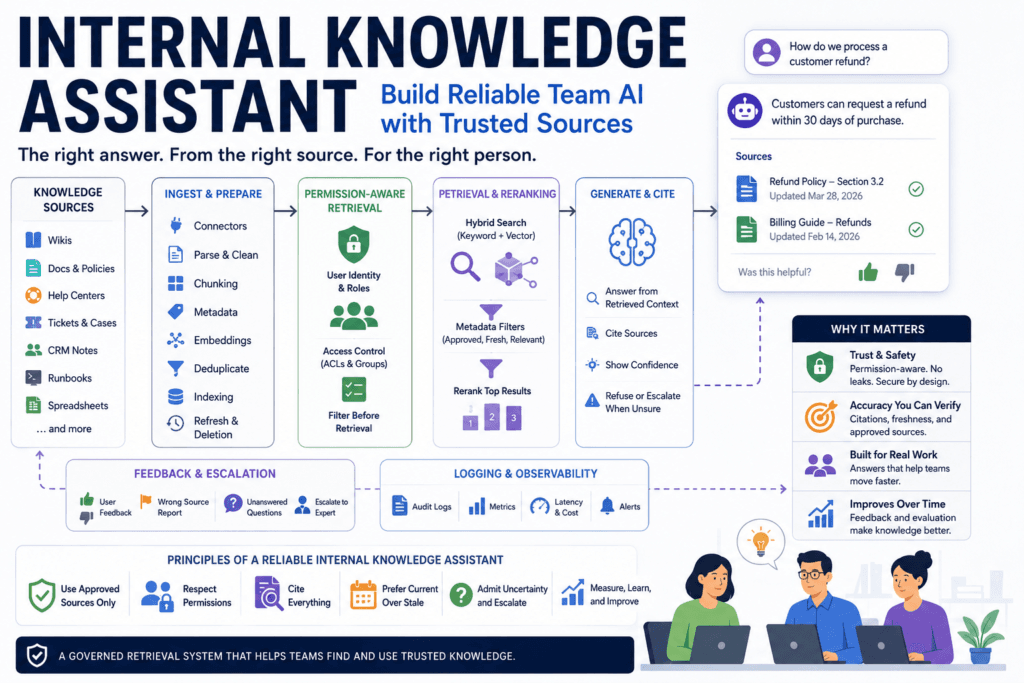
A reliable internal knowledge assistant is not just chat over company documents. It is a permission-aware retrieval system with governed sources, citations, evaluation, and feedback loops.
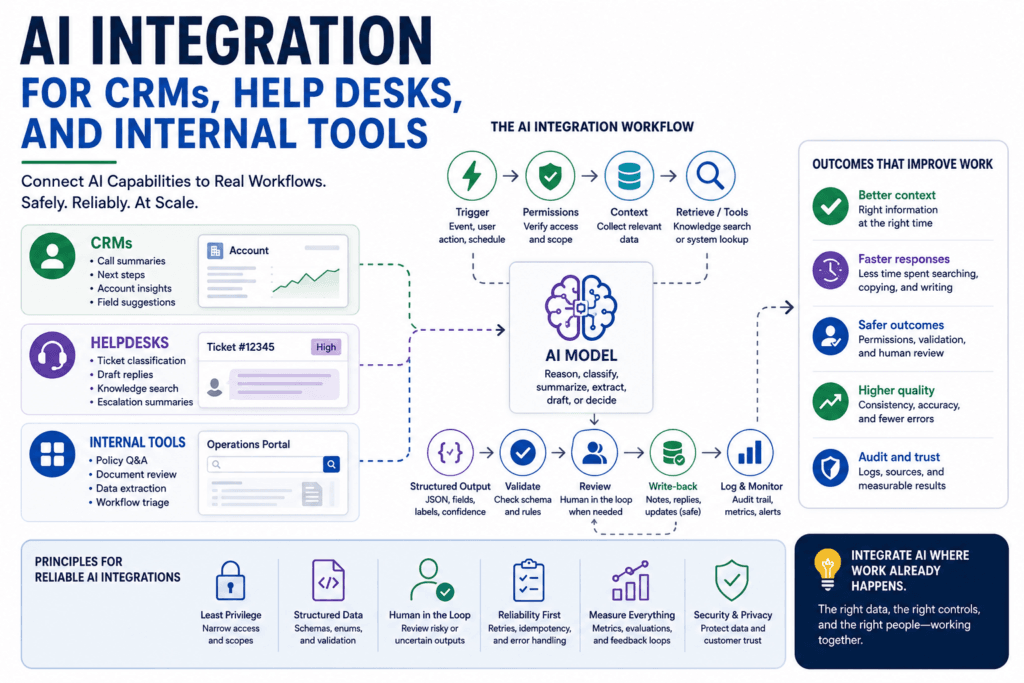
AI becomes useful when it is connected to the systems where work happens. This guide explains practical patterns for integrating AI into CRMs, helpdesks, and internal tools safely.
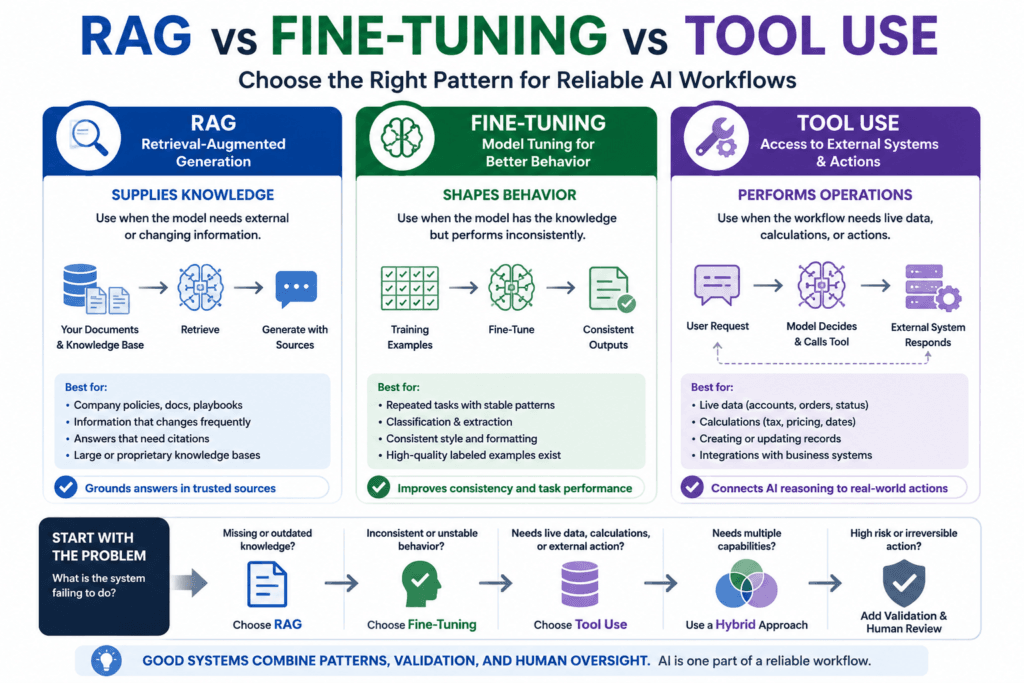
RAG, fine-tuning, and tool use solve different AI system problems. This lesson gives builders a practical decision framework for choosing the right pattern.
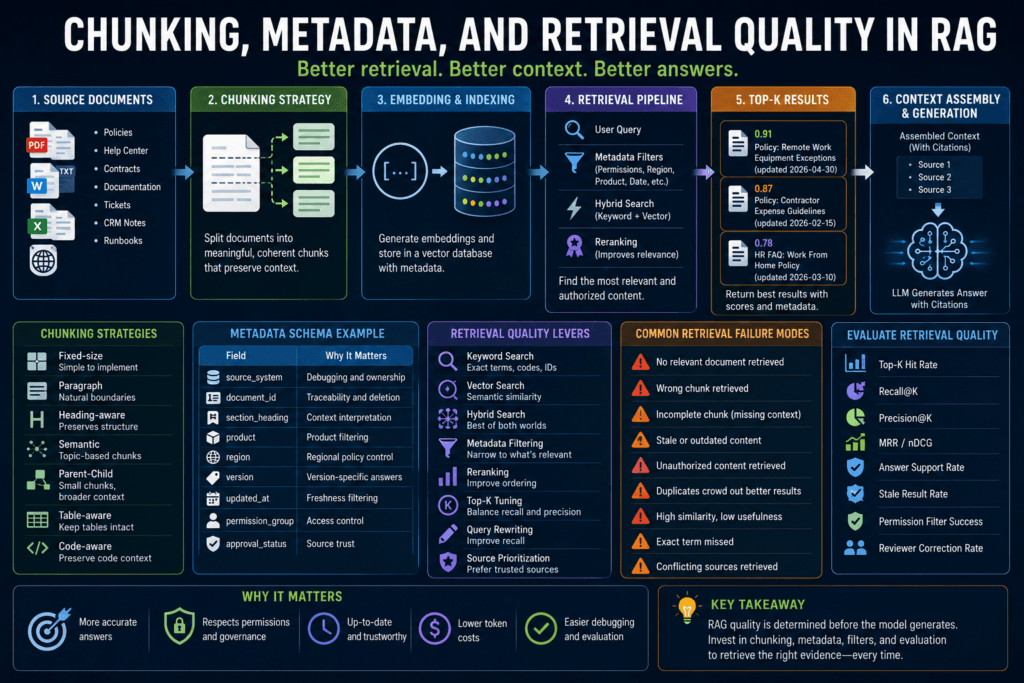
RAG systems often fail before the model writes anything. This lesson explains how chunking, metadata, filtering, ranking, freshness, permissions, and retrieval evaluation determine whether RAG systems return useful evidence or misleading context.
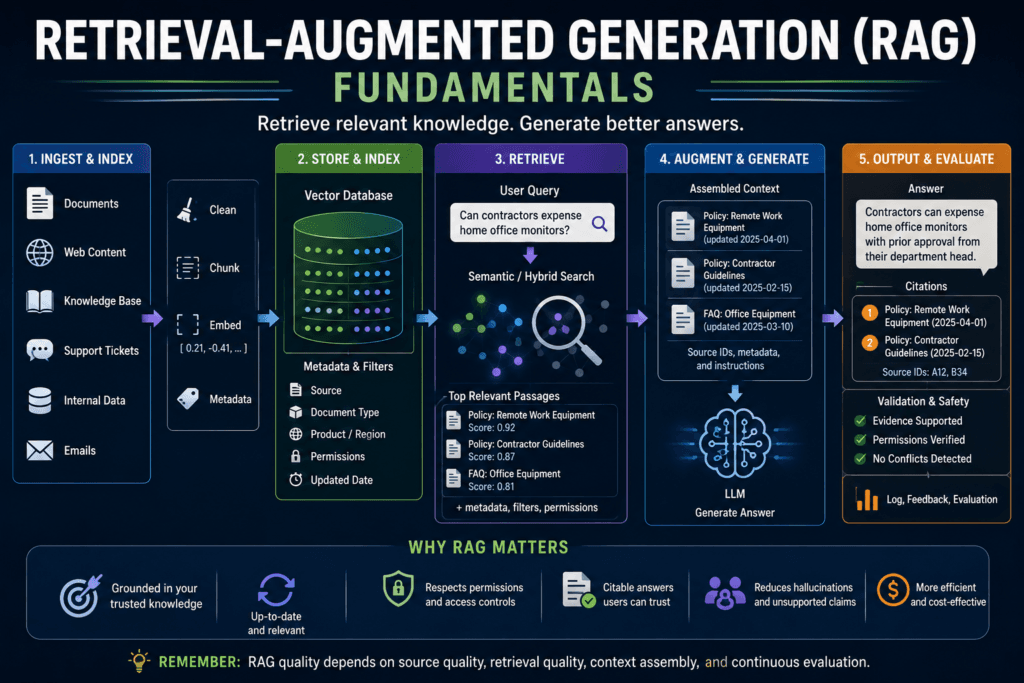
Retrieval-augmented generation, or RAG, helps AI systems answer with relevant external knowledge instead of relying only on model training data. This lesson explains how RAG works, where it helps, where it fails, and what production-ready implementation requires.
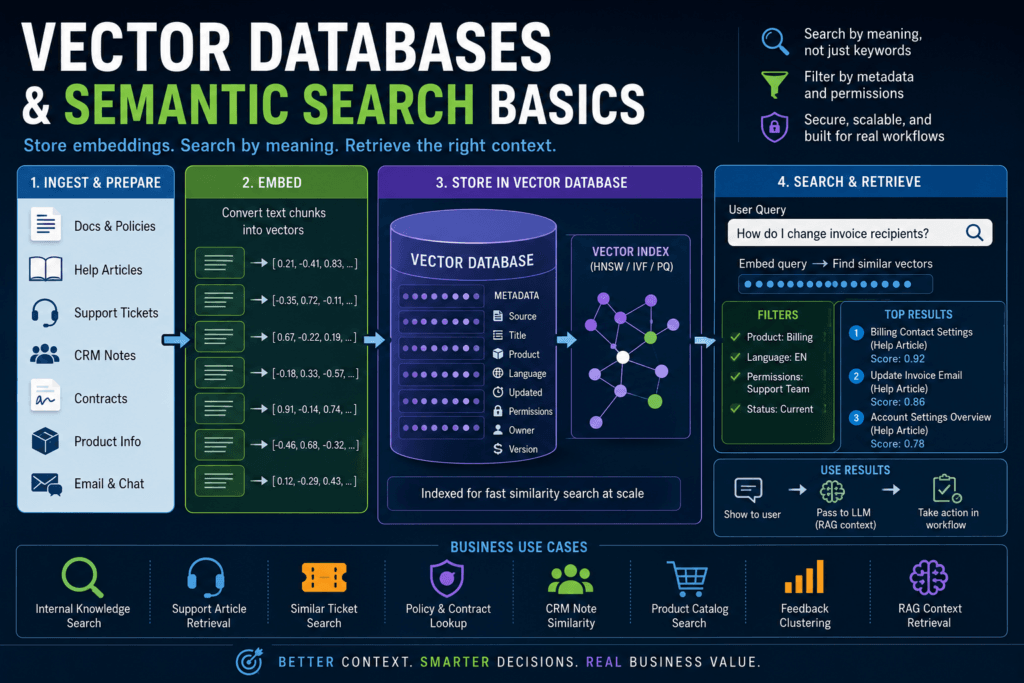
Vector databases make embedding-based search practical by storing vectors, indexing them for similarity search, applying metadata filters, and retrieving relevant business context for people, workflows, and RAG systems.
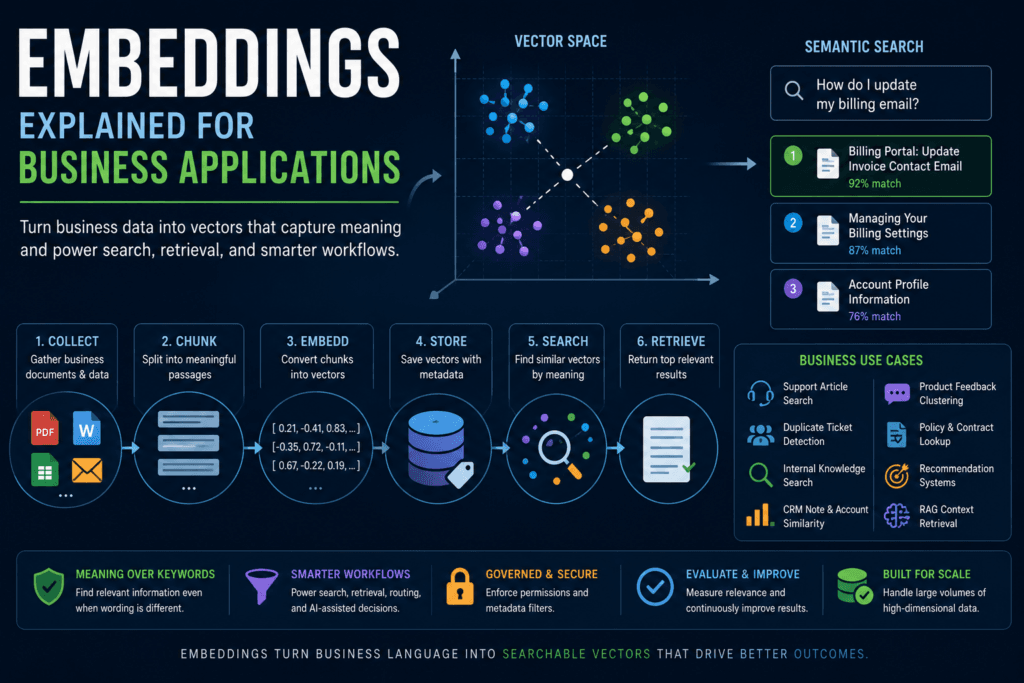
AI embeddings turn text and other business data into numerical vectors that can be compared by similarity. This lesson explains how embeddings support semantic search, retrieval, clustering, deduplication, recommendations, and RAG-style workflows in real business systems.
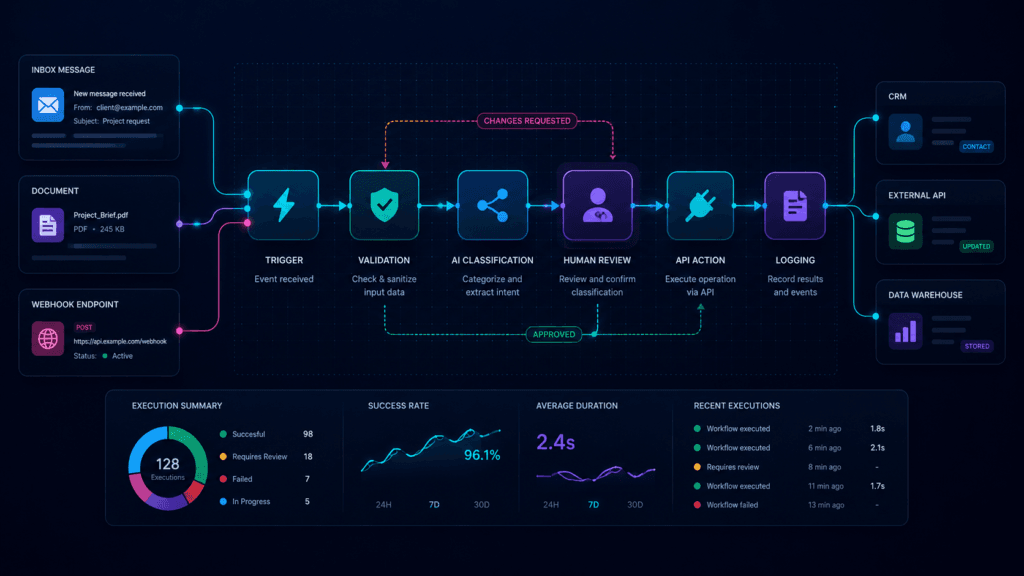
n8n workflow automation helps teams connect triggers, apps, APIs, AI calls, decisions, and actions into repeatable business workflows. This lesson explains what n8n is, where it fits, when to use it, when not to use it, and how to design a first workflow with validation, review, logging, and production safety in mind.
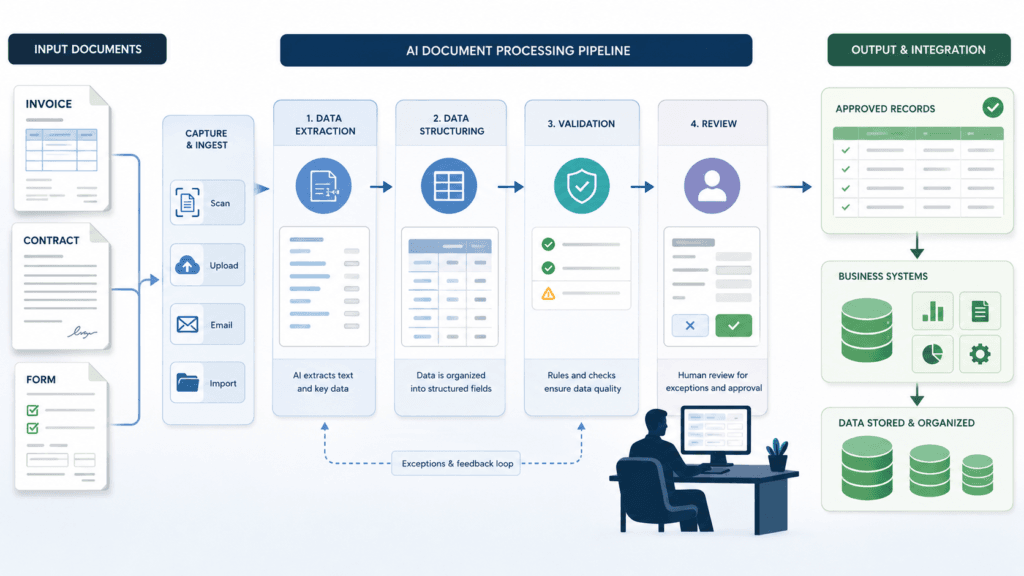
AI document processing can help businesses extract structured data from invoices, contracts, forms, and document packets. The useful pattern is not “ask the PDF a question.” It is a controlled workflow that classifies documents, extracts fields, preserves evidence, validates results, routes exceptions, and writes back only when safe.