Category: AI

All things AI from my professional perspective.
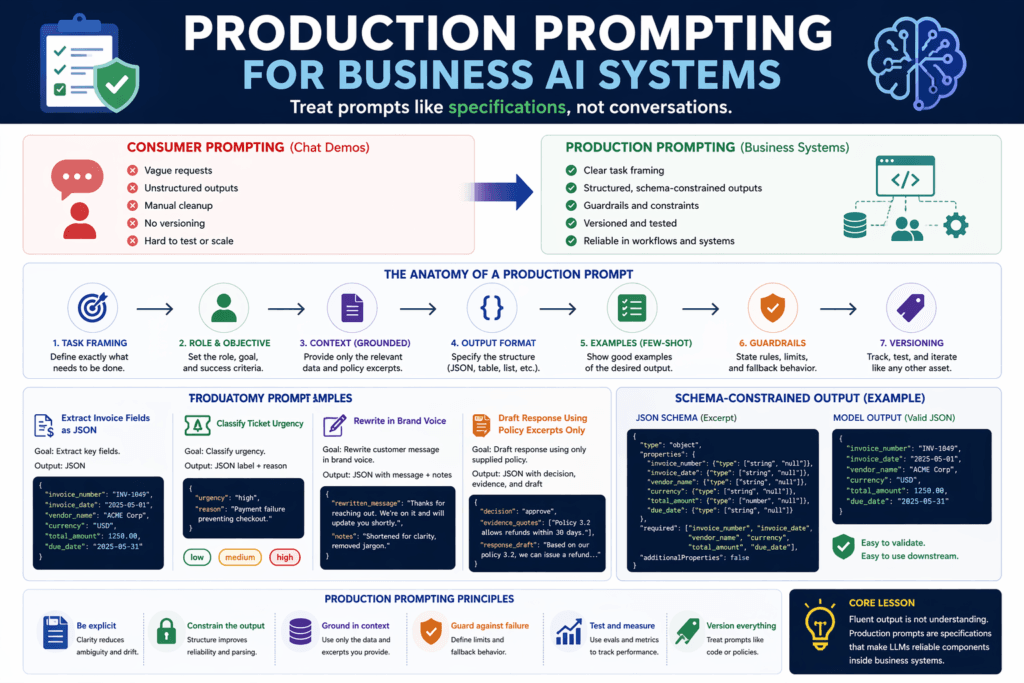
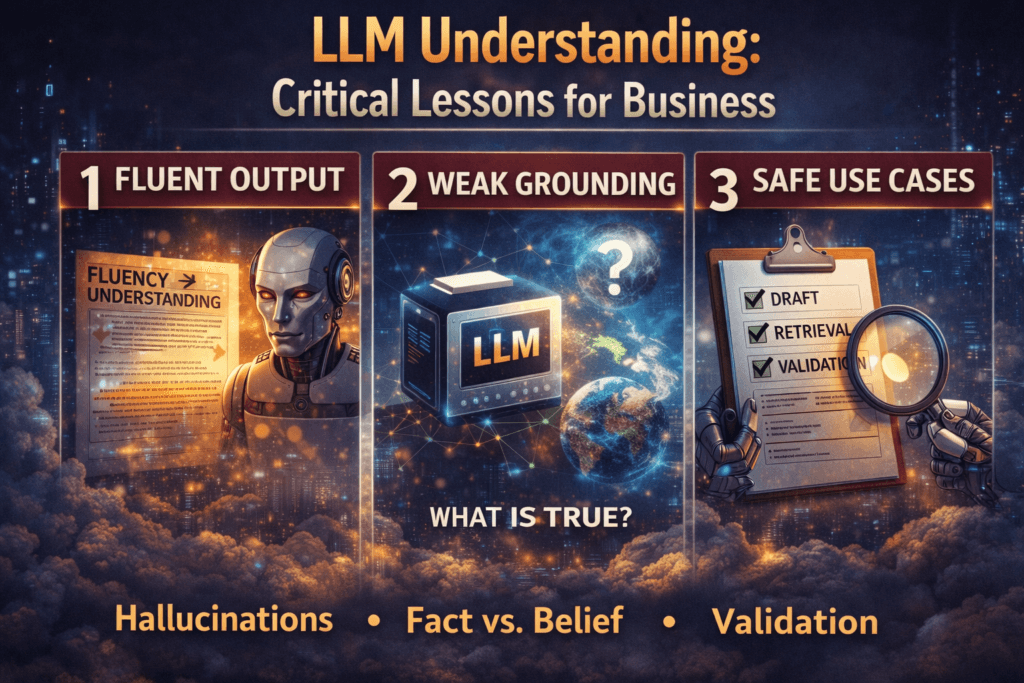
LLM Understanding: 7 Critical Lessons for Business

LLM understanding lessons for business and AI system design

Many companies deploy AI as if fluent output proves real understanding. Current research suggests a more useful mental model: LLMs are powerful probabilistic tools with limited grounding, which means better results come from constraints, retrieval, validation, and careful workflow design.

Read more

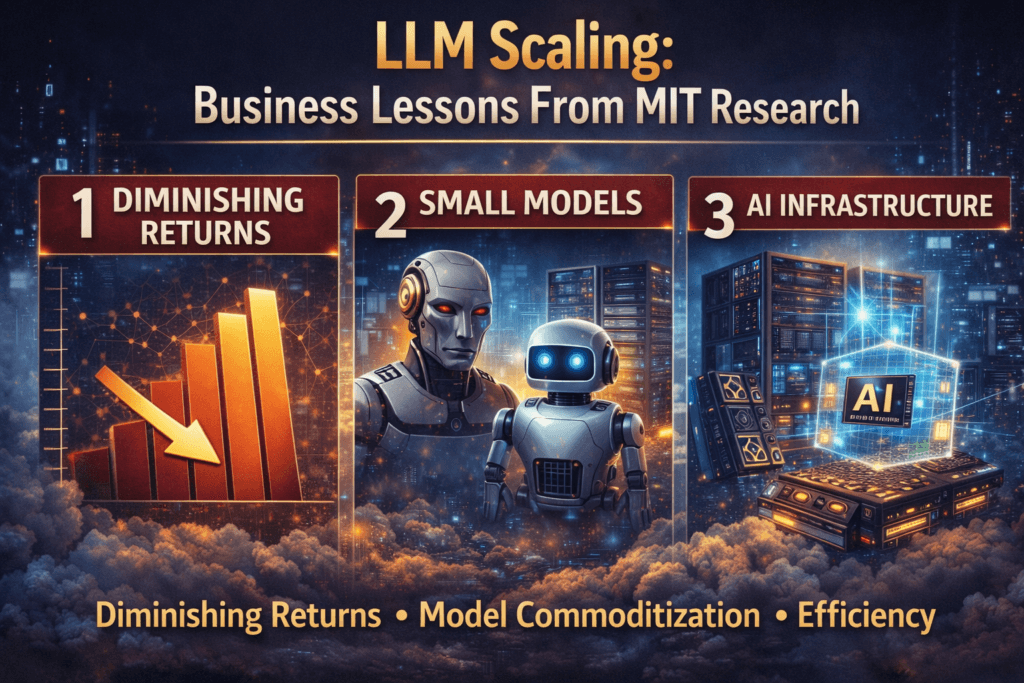
LLM Scaling: 7 Hard Lessons for Business

LLM scaling business lessons on diminishing returns and AI strategy

MIT/FutureTech research is being cited as evidence that conventional LLM scaling may be nearing diminishing returns. The stronger takeaway is narrower and more useful: brute-force compute may buy less strategic advantage over time, shifting value toward efficiency, integration, and commercial execution.

Read more

Amazon AI Incidents: 7 Hard Lessons for Business

Amazon AI incidents and business lessons on bias privacy and governance

Amazon AI incidents remain some of the clearest case studies in enterprise AI failure. From biased hiring models to privacy enforcement around Alexa and Ring, the known facts point to practical lessons about governance, deployment risk, data quality, and operational control.

Read more

Claude Code Leak: 7 Critical Lessons for Business

Claude Code leak lessons for business AI governance and operational risk

The Claude Code source leak was not a model-weights disaster. It was a revealing look at how real AI products work in production. For business leaders, the most important lessons are about permissions, telemetry, retention, governance, cost control, and operational maturity.

Read more

AI Token Costs: The Hidden Incentive Problem

AI token costs dashboard showing token usage, context growth, and cost control decisions

AI token costs are not just a technical metric. They sit at the center of a real incentive mismatch. Most inference providers get paid when applications send and generate more tokens, while users usually benefit from fewer tokens, faster responses, and lower bills. This guide explains where that mismatch shows up and how to control it.

Read more

LLMs for AGI: The Useful but Uncomfortable Truth

Concept illustration for LLMs for AGI showing a large language model between practical business use cases and the limits of general intelligence

Large language models may be extremely useful without being a clear path to artificial general intelligence. This article explains what today’s systems do well, where they still break down, why benchmark gains can mislead, and how to think about AI strategy without buying into AGI hype.

Read more

AI Tokens: The Essential Guide to Lower Cost

Diagram explaining AI tokens, tokenization, context windows, and model cost tradeoffs

AI tokens are the operating units behind modern language models. They affect context windows, pricing, latency, multilingual behavior, embeddings, training, inference, and the practical design tradeoffs behind real AI products.

Read more

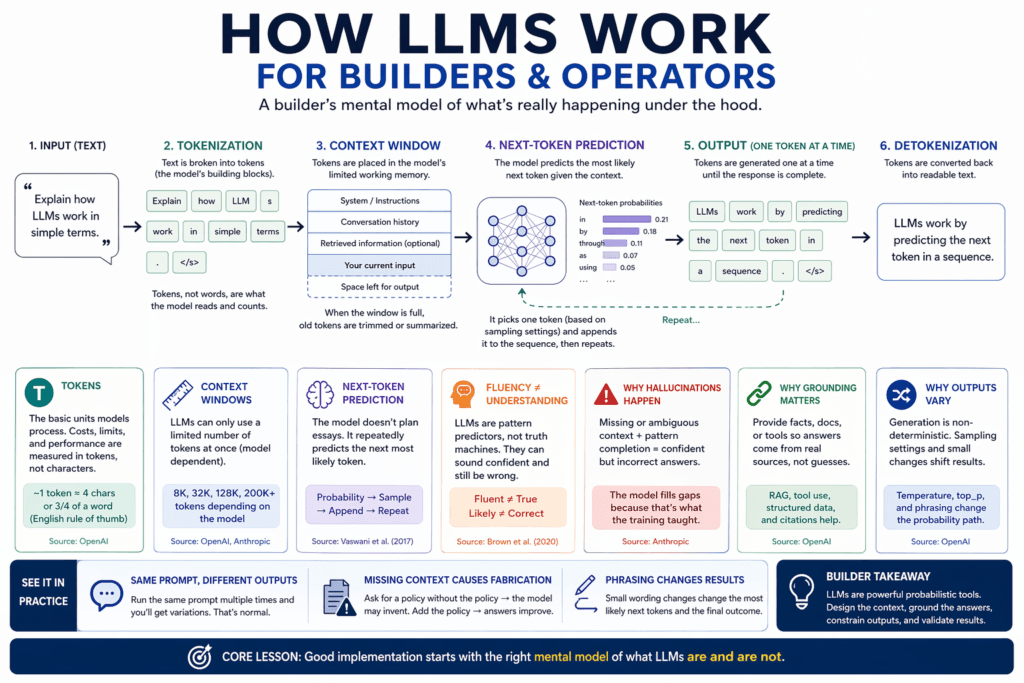
How LLMs Work: The Definitive, Surprising Truth

Diagram explaining how LLMs work from tokens and embeddings to attention, training, and next-token prediction

This article explains how LLMs work without hype. It traces the path from early probabilistic language models and n-grams to embeddings, tokenization, transformers, scaling laws, and post-training, showing how next-token prediction became the foundation of modern AI systems.

Read more