Category: Editorial

Posts filed under Editorial.

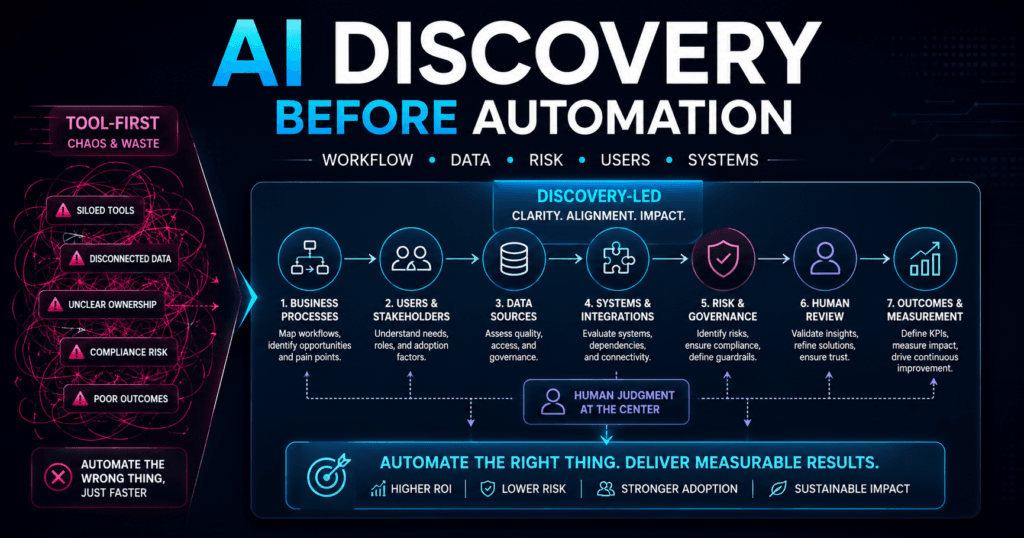
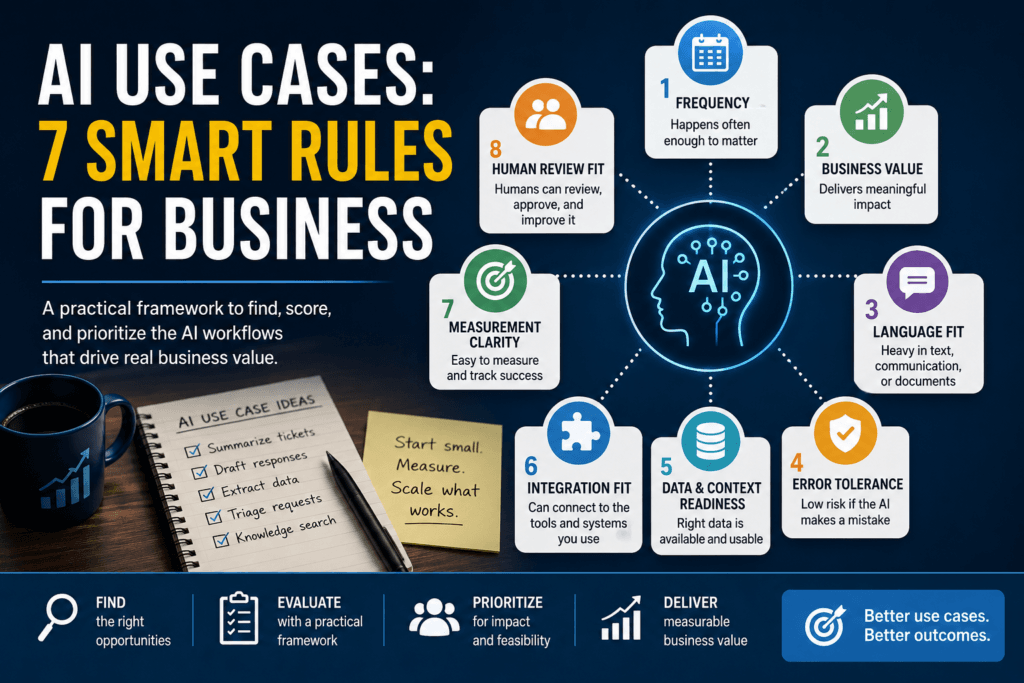
AI Discovery Is Where Automation Succeeds or Fails

AI discovery workflow map showing business process automation decisions, data readiness, risk controls, and human review points

AI discovery should not start with tools, models, agents, or automation ideas. It should start with how the business actually works. The best discovery process finds the workflow, data, risk, users, systems, and measurable outcome behind the request before deciding what should be automated, assisted, governed, or left alone.

Read more

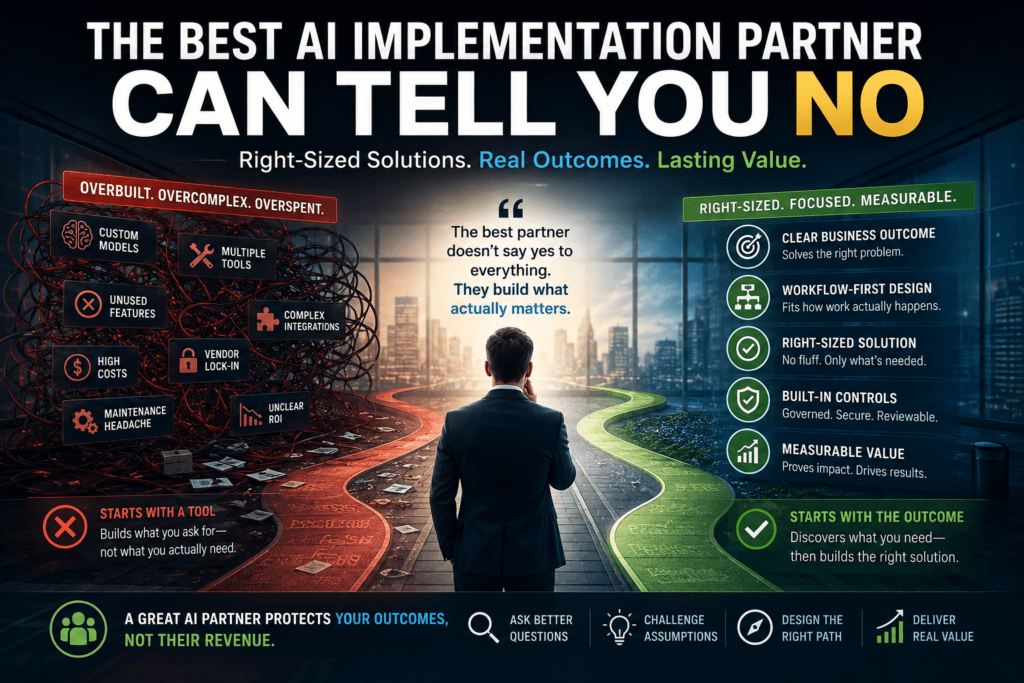
The AI Implementation Partner Who Can Tell You No

AI implementation partner decision map showing business request translation into right-sized workflow solutions

A good AI implementation partner should not simply build everything a business asks for. They should understand the workflow, challenge unnecessary complexity, and design the smallest responsible solution that achieves the business outcome. Sometimes that means less than expected. Sometimes it means more governance than expected. The point is fit, not flash.

Read more

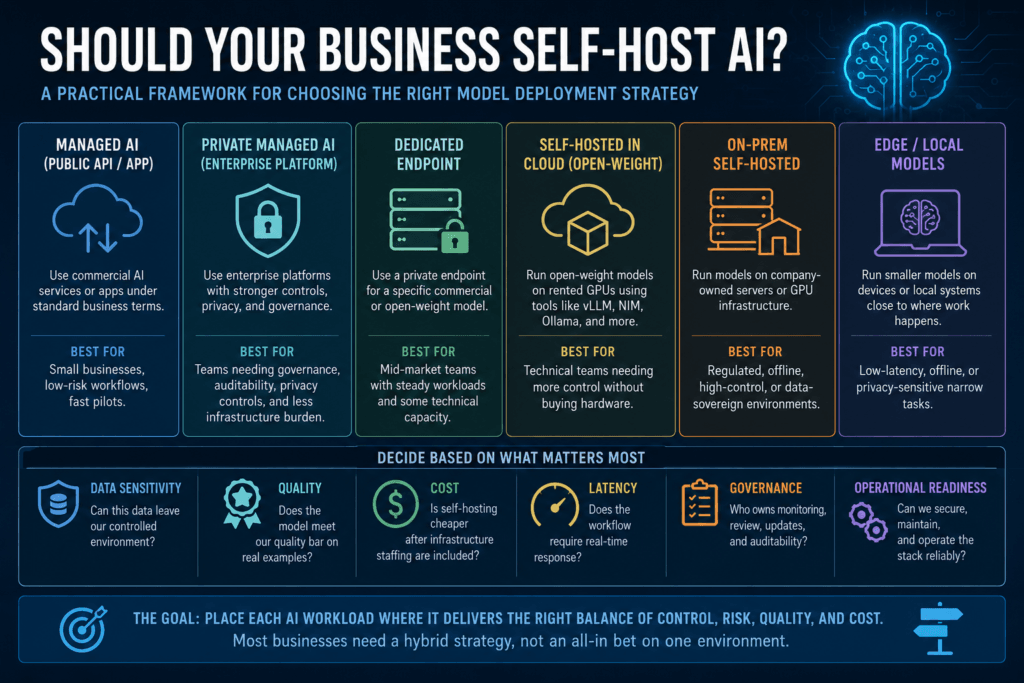
Should Your Business Self-Host AI? A Practical Framework

Self-host AI decision framework showing cloud, private, local, and hybrid model deployment options for business workflows

Self-hosting AI sounds safer, cheaper, and more independent. Sometimes it is. Often, it is an expensive operational commitment disguised as a privacy strategy. This article gives business and technical leaders a practical framework for choosing between managed AI, private cloud, local models, on-prem infrastructure, and hybrid model routing.

Read more

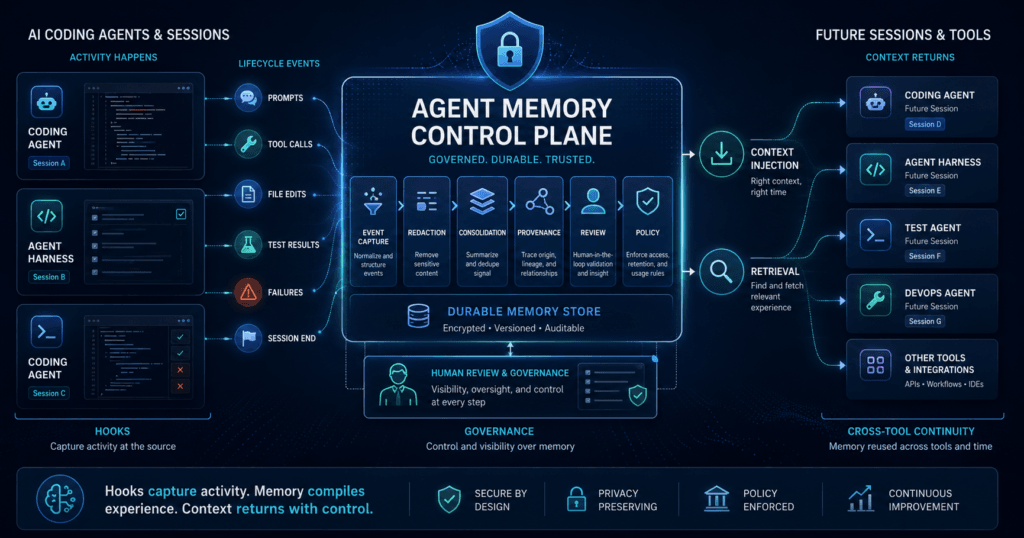
Agent Memory Control Plane: Critical AI Shift

Agent memory control plane diagram showing hooks capturing AI coding agent events, consolidating memory, and reinjecting context across tools.

AI coding agents do not just need bigger context windows or better prompt files. They need a controlled memory layer that survives across sessions, tools, and vendors. This article explains why hooks may matter more than MCP alone, how durable agent memory should work, and why memory ownership is becoming a serious business architecture decision.

Read more

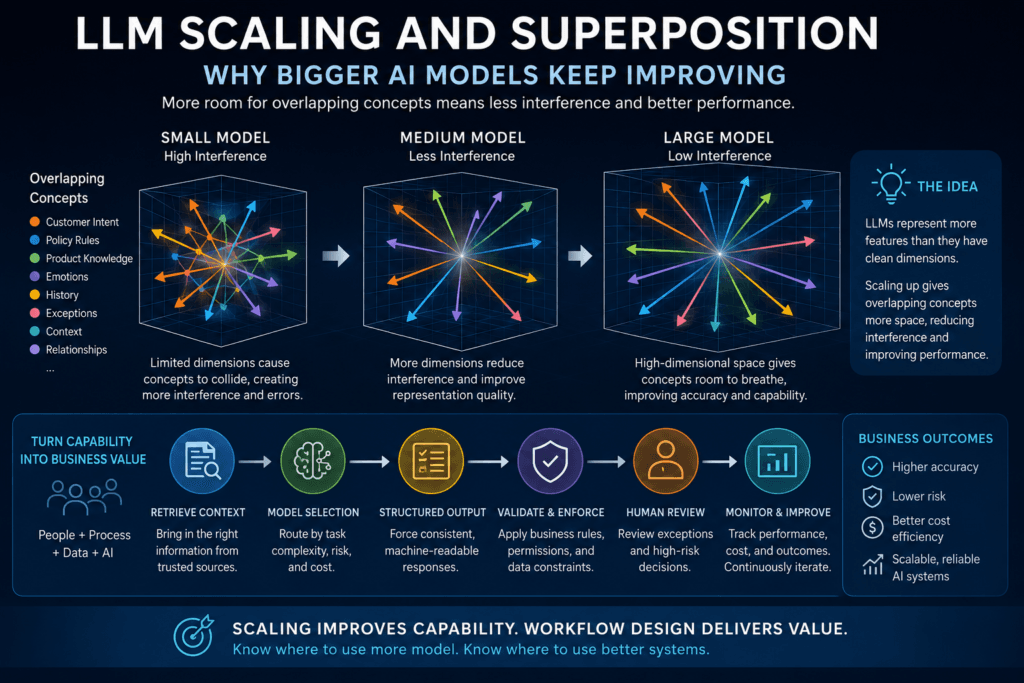
LLM Scaling: Why Bigger AI Models Keep Improving

Diagram showing LLM scaling as larger AI models reduce interference between overlapping concept representations in business workflows

LLM scaling is not just a brute-force story. MIT research on superposition suggests bigger AI models may improve because they give overlapping internal representations more room to interfere less. That helps explain why scale still matters, but it also shows why businesses need model selection, evaluation, workflow design, and cost discipline.

Read more

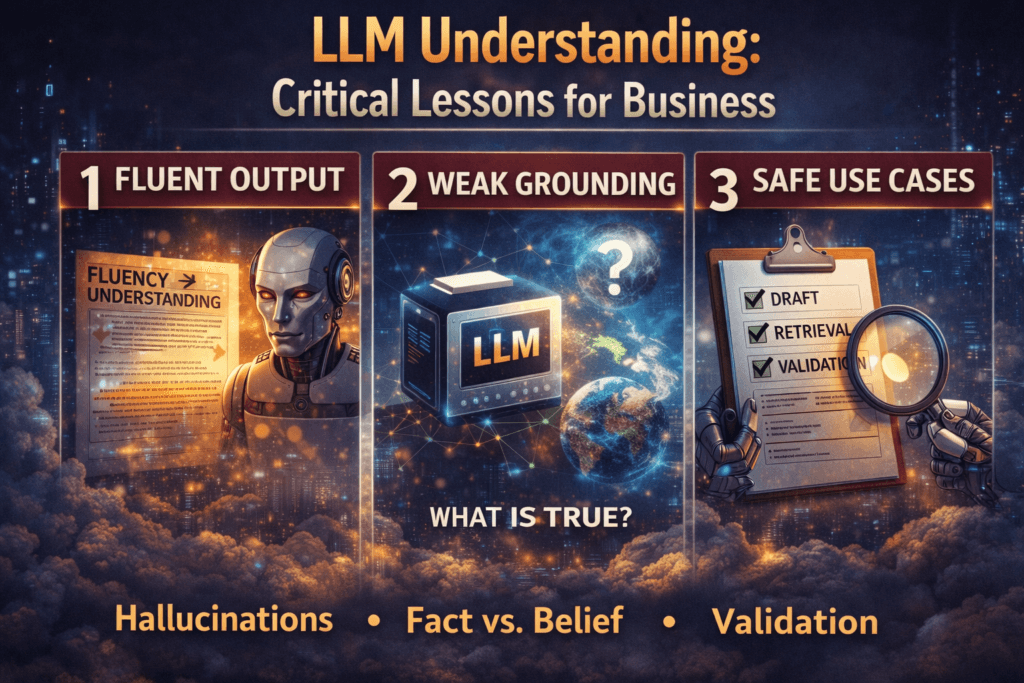
LLM Understanding: 7 Critical Lessons for Business

LLM understanding lessons for business and AI system design

Many companies deploy AI as if fluent output proves real understanding. Current research suggests a more useful mental model: LLMs are powerful probabilistic tools with limited grounding, which means better results come from constraints, retrieval, validation, and careful workflow design.

Read more

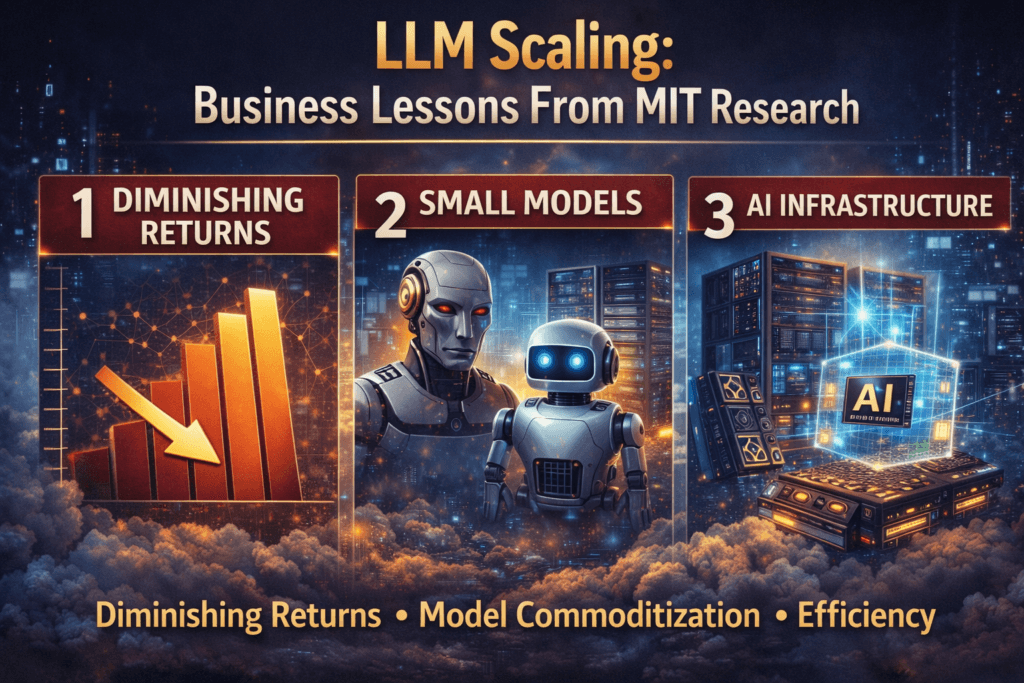
LLM Scaling: 7 Hard Lessons for Business

LLM scaling business lessons on diminishing returns and AI strategy

MIT/FutureTech research is being cited as evidence that conventional LLM scaling may be nearing diminishing returns. The stronger takeaway is narrower and more useful: brute-force compute may buy less strategic advantage over time, shifting value toward efficiency, integration, and commercial execution.

Read more

Amazon AI Incidents: 7 Hard Lessons for Business

Amazon AI incidents and business lessons on bias privacy and governance

Amazon AI incidents remain some of the clearest case studies in enterprise AI failure. From biased hiring models to privacy enforcement around Alexa and Ring, the known facts point to practical lessons about governance, deployment risk, data quality, and operational control.

Read more

Claude Code Leak: 7 Critical Lessons for Business

Claude Code leak lessons for business AI governance and operational risk

The Claude Code source leak was not a model-weights disaster. It was a revealing look at how real AI products work in production. For business leaders, the most important lessons are about permissions, telemetry, retention, governance, cost control, and operational maturity.

Read more