
AI resources
Find practical AI implementation guides
Use this AI resource finder to start with the structured Education library, then switch to Editorial analysis or the full AI archive when needed.
Search resources
Search the currently selected AI resource set. The page opens with Education resources; use the buttons to switch views.
Browse by type
Start with the structured Education library, then switch to Editorial analysis or the complete AI archive when needed.
View full AI archiveArticle index Latest AI education Showing Education posts
- AI Workflow Exception Handling: Reliable Recovery Patterns [2026-07-01]
- AI Workflow State Machines: Implementation Guide [2026-06-30]
- Practical Multi-Step AI Workflows Without Agent Sprawl [2026-06-10]
- Human-in-the-Loop AI Workflows: Reliable Approval Systems [2026-06-09]
- AI Agent Guardrails for Safe Workflow Permissions [2026-06-04]
- AI Function Calling: Practical Tool-Use Lesson [2026-06-02]
- AI Decision Support: When AI Should Recommend, Not Decide [2026-05-27]
- AI Agents vs Workflows: A Practical, Reliable Decision Guide [2026-05-26]
- Sales AI: Reliable Notes and CRM Enrichment Guide [2026-05-22]
- Customer Support AI: Reliable Triage and Drafting Guide [2026-05-21]
- Internal Knowledge Assistant: Reliable Team AI Guide [2026-05-20]
- Event-Driven AI Workflows: Reliable Guide [2026-05-19]
- AI Integration: Reliable CRM and Helpdesk Guide [2026-05-18]
- RAG vs Fine-Tuning: Reliable Guide to Tool Use [2026-05-15]
- RAG Retrieval Quality: Powerful Chunking Guide [2026-05-14]
- Retrieval-Augmented Generation: Reliable RAG Guide [2026-05-13]
- Vector Databases: Powerful Guide to Smart Search [2026-05-12]
- AI Embeddings: Powerful Guide for Business Search [2026-05-11]
- n8n Workflow Automation: Practical Business Guide [2026-05-11]
- AI Document Processing: Reliable Guide for Business [2026-05-08]
- AI Cost Control: Smart Guide for Efficient Systems [2026-05-08]
- AI Model Selection: Powerful Guide for Smart Business AI [2026-05-07]
- Powerful Text Classification, Extraction, and Summarization with AI [2026-04-30]
- Structured Outputs for AI Workflows: Reliable Guide [2026-04-29]
- Production Prompting: Essential Business AI Guide [2026-04-28]
- How LLMs Work: Essential Guide for Builders [2026-04-27]
- AI Workflow Anatomy: Essential Guide for Business [2026-04-26]
- LLM Integration: 7 Best Python Patterns [2026-04-18]
AI → Education
Education resources
Follow the structured AI learning path from practical foundations into production workflow design.
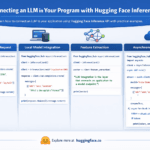
LLM Integration: 7 Best Python Patterns
LLM integration is one of the most important fundamentals in modern AI development. Before you build retrieval, agents, workflows, or polished product features, you…
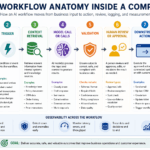
AI Workflow Anatomy: Essential Guide for Business
This lesson explains how an AI workflow actually operates inside a company. Instead of treating AI as a chatbot sitting off to the side, it breaks the system into inputs, triggers, retrieval, model calls, validation, human review, downstream actions, and measurement so teams can design workflows that are useful, controllable, and worth operating.
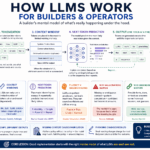
How LLMs Work: Essential Guide for Builders
This lesson explains how LLMs work well enough for builders and operators to design better prompts, retrieval, validation, and workflows. It covers tokens, context windows, next-token prediction, hallucinations, grounding, and output variability with practical examples and API-oriented code.
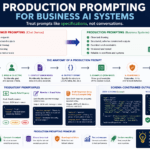
Production Prompting: Essential Business AI Guide
This lesson explains why production prompting is different from consumer chat prompting. It shows how to design prompts as operational specifications with explicit tasks, grounded context, structured outputs, guardrails, examples, and version control so business AI systems behave more reliably in production.
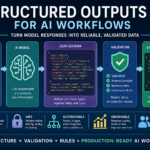
Structured Outputs for AI Workflows: Reliable Guide
Structured outputs for AI workflows help turn free-form model responses into validated, machine-readable data. This lesson explains how JSON Schema, validation, retries, and business rules make AI systems far more reliable in production.
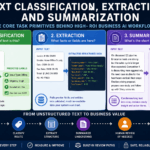
Powerful Text Classification, Extraction, and Summarization with AI
Text classification, extraction, and summarization are the core task primitives behind many high-ROI AI workflows. This lesson explains what each one does, where it fits in business systems, how to implement them reliably, and how to evaluate them in production.

AI Model Selection: Powerful Guide for Smart Business AI
Choosing an AI model is not about picking the biggest or newest option. This lesson teaches a practical model-selection framework for business AI workflows, including task fit, cost, latency, risk, context, evaluation, and when stronger models are actually justified.
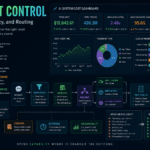
AI Cost Control: Smart Guide for Efficient Systems
AI cost control is not just about choosing cheaper models. This lesson explains how tokens, latency, retries, context, routing, caching, batching, and evaluation affect the real cost of production AI systems.
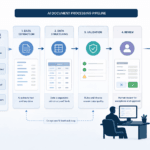
AI Document Processing: Reliable Guide for Business
AI document processing can help businesses extract structured data from invoices, contracts, forms, and document packets. The useful pattern is not “ask the PDF a question.” It is a controlled workflow that classifies documents, extracts fields, preserves evidence, validates results, routes exceptions, and writes back only when safe.
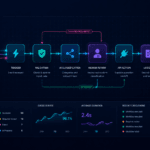
n8n Workflow Automation: Practical Business Guide
n8n workflow automation helps teams connect triggers, apps, APIs, AI calls, decisions, and actions into repeatable business workflows. This lesson explains what n8n is, where it fits, when to use it, when not to use it, and how to design a first workflow with validation, review, logging, and production safety in mind.
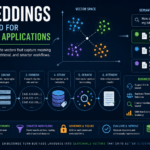
AI Embeddings: Powerful Guide for Business Search
AI embeddings turn text and other business data into numerical vectors that can be compared by similarity. This lesson explains how embeddings support semantic search, retrieval, clustering, deduplication, recommendations, and RAG-style workflows in real business systems.
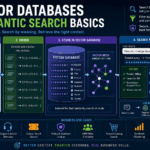
Vector Databases: Powerful Guide to Smart Search
Vector databases make embedding-based search practical by storing vectors, indexing them for similarity search, applying metadata filters, and retrieving relevant business context for people, workflows, and RAG systems.
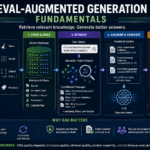
Retrieval-Augmented Generation: Reliable RAG Guide
Retrieval-augmented generation, or RAG, helps AI systems answer with relevant external knowledge instead of relying only on model training data. This lesson explains how RAG works, where it helps, where it fails, and what production-ready implementation requires.
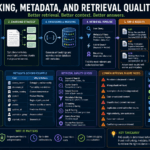
RAG Retrieval Quality: Powerful Chunking Guide
RAG systems often fail before the model writes anything. This lesson explains how chunking, metadata, filtering, ranking, freshness, permissions, and retrieval evaluation determine whether RAG systems return useful evidence or misleading context.
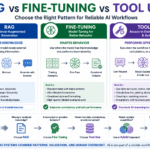
RAG vs Fine-Tuning: Reliable Guide to Tool Use
RAG, fine-tuning, and tool use solve different AI system problems. This lesson gives builders a practical decision framework for choosing the right pattern.
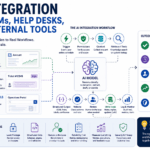
AI Integration: Reliable CRM and Helpdesk Guide
AI becomes useful when it is connected to the systems where work happens. This guide explains practical patterns for integrating AI into CRMs, helpdesks, and internal tools safely.
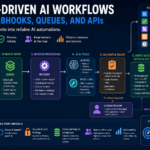
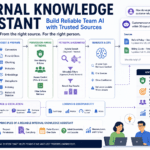
Internal Knowledge Assistant: Reliable Team AI Guide
A reliable internal knowledge assistant is not just chat over company documents. It is a permission-aware retrieval system with governed sources, citations, evaluation, and feedback loops.
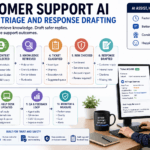
Customer Support AI: Reliable Triage and Drafting Guide
Customer support AI works best as an agent-assist workflow. This guide explains how to classify tickets, retrieve approved knowledge, draft replies, route risk, and evaluate quality.
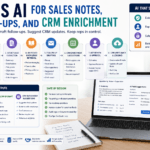
Sales AI: Reliable Notes and CRM Enrichment Guide
Sales AI works best as a rep-assist workflow. This guide explains how to summarize calls, draft follow-ups, suggest CRM updates, protect CRM quality, and measure sales execution.
AI Agents vs Workflows: A Practical, Reliable Decision Guide
Should you build a deterministic workflow or an autonomous AI agent? This lesson gives leaders and builders a reliable decision framework, clear definitions, a comparison table, and a worked hybrid example (support triage with one agentic step). You’ll learn how autonomy affects reliability, governance, cost, and change control, and you will leave with an implementation checklist, exercise, and knowledge check.
AI Decision Support: When AI Should Recommend, Not Decide
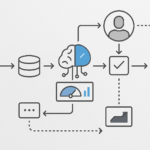
Leaders feel pressure to “automate decisions,” but most value emerges when AI recommends and a human decides. Wait to grant more autonomy until evidence, controls, and reversibility justify it. This editorial explains where AI should stop, how to design human-in-the-loop review that actually works, and the governance, thresholds, and proofs required before shifting from recommendation to decision.

AI Function Calling: Practical Tool-Use Lesson
AI function calling lets an AI system request live data, calculations, or workflow actions through structured tool calls. This lesson explains how the model, application, APIs, permissions, validation, human review, and audit logs fit together so leaders and builders can design safer business AI systems without confusing demos with production readiness.

AI Agent Guardrails for Safe Workflow Permissions
AI agents become more useful when they can act, but action creates risk. This lesson explains how to design AI agent guardrails around permissions, tool access, approval gates, logging, and rollback paths. You will learn how to classify agent actions, apply least privilege, and build a practical permission matrix before connecting agents to live business systems.

Human-in-the-Loop AI Workflows: Reliable Approval Systems
Human-in-the-loop AI workflows are often treated as a simple approval button. That misses the real design problem. This lesson explains how to build approval systems with risk rules, review queues, context, decision states, escalation, audit trails, and measurement so AI can assist real business operations without getting unchecked authority over customers, money, records, or external actions.

Practical Multi-Step AI Workflows Without Agent Sprawl
Multi-step AI workflows do not automatically require autonomous agents. This lesson teaches a practical design pattern: map the business process, use deterministic orchestration as the backbone, add bounded LLM calls where judgment helps, preserve workflow state, validate outputs, route exceptions, and require human approval before high-impact actions.

AI Workflow State Machines: Implementation Guide
Multi-step AI systems often fail because the model is quietly acting as the workflow controller. This lesson explains how AI workflow state machines help teams track where work is, what happened, what can happen next, what requires review, and how to retry safely. Learn the state-machine pattern through definitions, examples, checklists, failure modes, and a practical design exercise.

AI Workflow Exception Handling: Reliable Recovery Patterns
AI workflows fail in ordinary ways before they fail in dramatic ways. Model outputs may be invalid, APIs may time out, webhooks may arrive twice, reviewers may delay decisions, and downstream writes may partially succeed. This lesson teaches practical exception handling and recovery patterns for production AI workflows so teams can design safer retries, escalation paths, human review, and evidence capture before scaling automation.
No AI resources match your search in this section. Try another keyword or switch resource type.